


People’s Republic of China


Implementing the Global Governance Initiative
And Reforming and Improving Global Human Rights Governance
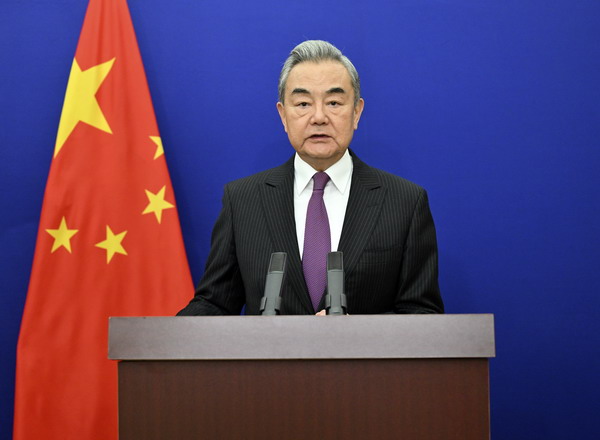
Remarks by H.E. Wang Yi
Member of the Political Bureau of the CPC Central Committee
And Foreign Minister of the People’s Republic of China
At the High-Level Segment of the 61st Session of
The United Nations Human Rights Council
February 23, 2026
Mr. President,
Colleagues,
Our world today is witnessing complexities in the international landscape, incessant regional conflicts, and some country challenging right with might. The postwar international order and global human rights governance are confronted with new critical questions. History shows in stormy nights we must hold high the banner of multilateralism and press ahead together.
Last September, President Xi Jinping solemnly put forth the Global Governance Initiative (GGI). More than 150 countries and international organizations stand for it. The Group of Friends of Global Governance later launched marks a solid step in implementing the GGI. The Initiative is deeply human-centered and highly relevant to human rights, offering Chinese insight on the future of global human rights governance. China stands ready to work with all countries to implement the GGI and boost global human rights governance and the sound development of the global human rights cause.
First, we must uphold sovereign equality and stay true to the purpose of global human rights governance. No country is in a position to lecture others on human rights, and no model can claim to be superior. A path to human rights development must reflect national realities and meet the people’s needs to hold real promise. All countries must be equal in participation, decision-making and benefit-sharing, and the calls and aspirations of the Global South nations must be heard. This is how to shape a just, equitable and inclusive global human rights governance system.
Second, we must abide by international rule of law and strengthen the foundation of global human rights governance. Human rights must not be an ornament for democracy, nor a cover for hegemonism. The purposes and principles of the U.N. Charter and equal and uniform application of international law and rules provide fundamental guarantee for human rights development and advancement. All must uphold the “golden rule” of noninterference, and firmly reject statements and actions that employ double standards in the name of human rights.
Third, we must practice multilateralism to tackle the challenges facing global human rights governance. The promotion and protection of human rights is a common cause of mankind. This year marks the 20th anniversary of the establishment of the United Nations Human Rights Council (UNHRC). This is an opportunity for countries to carry out dialogue and cooperation, strive to put an end to all forms of colonialism and racial discrimination, and navigate emerging domains such as artificial intelligence and climate change in relation to human rights. We must be membership-led and follow the principle of extensive consultation and joint contribution for shared benefit to advance U.N. reform in the human rights field in a steady way, and support multilateral human rights bodies in fulfilling their duties in an objective and impartial way.
Fourth, we must advocate a people-centred approach and make global human rights governance more meaningful. To live a happy life is the greatest human right, and development holds the key to achieving it. There must be effective responses to the most urgent and immediate concerns of the people. Their needs in eldercare, childcare, social assistance and medical services must be met. Everyone must be able to enjoy dignity and no one should be left behind. This year also marks the 40th anniversary of the adoption of the Declaration on the Right to Development. The international community should put the right to development higher on the multilateral human rights agenda, and mobilize development resources to enhance well-being and make human rights progress visible, tangible and accessible.
Fifth, we must be action-oriented and enhance the effectiveness of global human rights governance. The promotion and protection of human rights must be done through actions, not rhetoric. Last year, China successfully hosted the Global Leaders’ Meeting on Women and launched new initiatives for advancing the global women’s cause. China facilitated the UNHRC’s adoption of resolutions on the contribution of development to human rights and on economic, social and cultural rights, energizing cooperation that benefits all parties. China shared its philosophy and practices on human rights through platforms created to enhance human resources training and capacity building in developing countries. China stands ready to work in step with the international community to open up new horizons in the global human rights cause.
Mr. President,
Colleagues,
The year of 2026 marks the beginning of China’s 15th Five-Year Plan period. China will take solid steps to promote common prosperity for all its people, keep strengthening the whole-process people’s democracy, promote the all-around advancement of the cause of human rights, and deliver more fruits of Chinese modernization to the whole population in a more equitable way. China stands ready to work with all countries to promote development and prosperity for all, safeguard international fairness and justice, champion the common values of humanity, and build a community with a shared future for humanity to advance our civilization in the field of human rights and make it beneficial for the entire world.
Thank you!