People’s Republic of China


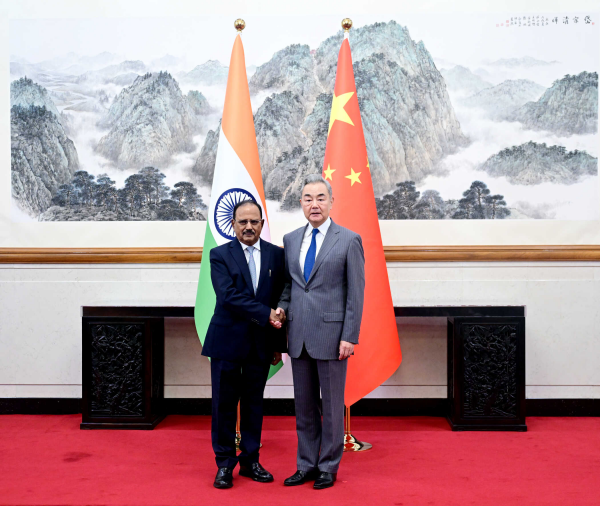
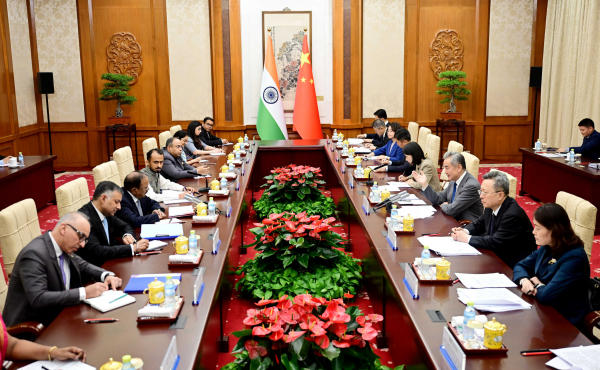
On August 25, 2026, the 25th Round of Talks Between the Special Representatives of China and India on the Boundary Question was held in Beijing. China’s Special Representative, Member of the Political Bureau of the CPC Central Committee, and Director of the Office of the Central Commission for Foreign Affairs Wang Yi had comprehensive, in-depth, friendly and candid communication with India’s Special Representative and National Security Advisor Ajit Doval on the China-India boundary question and bilateral relations, among others.
Wang Yi noted that China and India are important neighbors to each other, and both are major developing countries and representatives of emerging economies. A sound and steady development of China-India relations serves the fundamental interests of the two peoples, meets the common aspiration of Global South countries, and conforms to the trend of the times. The China-India relationship has gone beyond the bilateral scope and bears global and strategic significance. In recent years, President Xi Jinping and Prime Minister Narendra Modi held two meetings in Kazan and Tianjin, reaching a series of important common understandings that charted the course for the improvement and development of bilateral relations. China is ready to work with India to view and handle the bilateral relations from a strategic and long-term perspective, strengthen communication, enhance mutual understanding, resolve differences and overcome obstacles, so as to be good-neighborly friends and partners that help each other succeed, and engage in a cooperative pas de deux of the dragon and the elephant.
Wang Yi stated that the two sides are implementing in an orderly manner the common understandings reached at the Special Representatives’ talks. Bilateral institutional exchanges and cooperation are gradually resuming, with both sides committed to safeguarding peace and tranquility in the border areas. The two sides should draw lessons from history, place the boundary question in an appropriate position in bilateral relations, keep moving forward without stagnation, regression or deviation, and gradually foster a positive narrative on China-India boundary affairs, making dialogue, peace, consultation and cooperation the mainstream, so as to inject positive factors into the sound and steady development of bilateral relations.
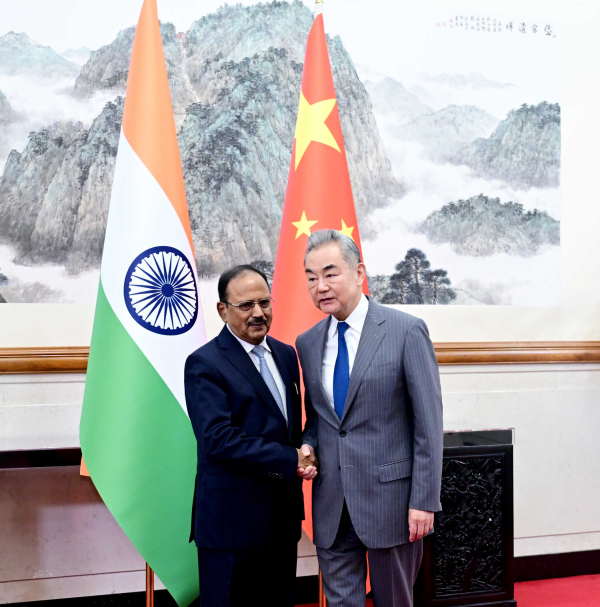
Ajit Doval said that India and China are both ancient civilizations, populous countries and major economies, and are cooperative partners rather than competitors. A stable, predictable and forward-looking India-China relationship serves the common interests of the two peoples and is of great significance to Asia and the world at large. Under the guidance of the two leaders, India-China relations have returned to the right track, with overall tranquility maintained in the border areas and exchanges and cooperation in various fields steadily advanced. India is ready to work with China to further intensify strategic communication, expand mutually beneficial cooperation, deepen multilateral coordination, effectively manage the border areas, explore solutions to the boundary question, and promote faster improvement and development of India-China relations.
The two sides had in-depth discussions on advancing boundary delimitation negotiations, properly managing and controlling the border, improving relevant mechanisms and promoting cross-border cooperation. They reiterated that, in accordance with the political parameters and guiding principles agreed in 2005, and in the spirit of mutual respect and mutual understanding, they will give full play to the Special Representatives mechanism to seek a fair, reasonable and mutually acceptable package solution to the boundary question. The two sides will continue to properly handle the boundary question through dialogue and consultation, and jointly uphold peace and tranquility in the border areas. The two sides agreed to hold the 26th Round of Talks Between the Special Representatives of China and India on the Boundary Question in India in 2027.
The two sides also exchanged views on international and regional issues of common interest.