People’s Republic of China


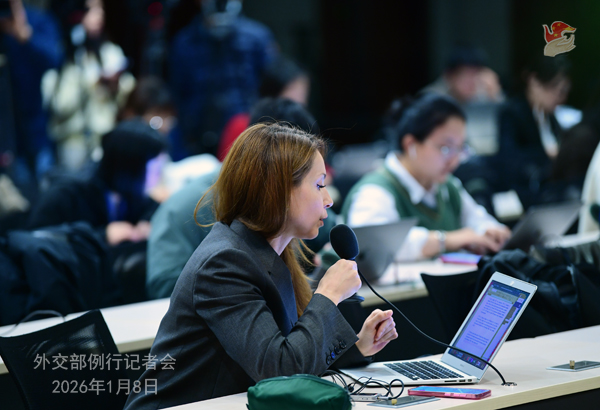
China News Service: This morning, China Arms Control and Disarmament Association, together with another academic institute, issued a report titled “Nuclear Ambitions of Japan’s Right-Wing Forces: A Serious Threat to World Peace.” The report pointed out that the expanding nuclear ambitions of the Japanese right-wing forces are posing serious threats to world peace, and called for Prime Minister of Japan Sanae Takaichi to immediately clarify Japan’s position on the issue of nuclear weapons. What’s China’s comment?
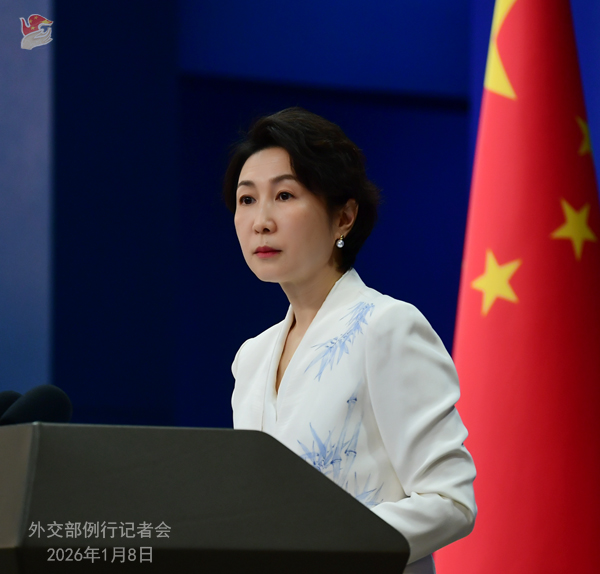
Mao Ning: Since the new Japanese government took office, it has not hesitated to reveal the nuclear ambitions of right-wing forces. Prime Minister of Japan Sanae Takaichi and other senior officials sought to revise the three non-nuclear principles, implied the introduction of nuclear-powered submarines, called for boosting “extended deterrence” that Japan receives, and openly claimed that “Japan should have nuclear weapons.” Such moves of the Japanese side form a grave challenge to the international nuclear non-proliferation regime based on the Treaty on the Non-Proliferation of Nuclear Weapons (NPT) and the postwar international order, and have been met with strong opposition from the international community and people from various sectors within Japan.
This report you mentioned exposes the intention of Japanese right-wing forces to own nuclear weapons, lists the alarming facts that Japan has been conducting research on nuclear weapons secretly and stockpiling large amount of sensitive nuclear materials for a long time, and has the potential of developing nuclear weapons. The report delves into the negative impacts Japanese right-wing forces’ nuclear-related words and deeds could have on international peace and security, proposed a series of measures and suggestions on eliminating the vicious impact of words and deeds of the Japanese side, and called for opposing Japan’s possession of nuclear weapons and safeguarding world peace.
The Japanese right-wing forces’ inflating nuclear ambitions are a dangerous signal of the resurgence of militarism in Japan, and pose serious threats to world peace and stability. The Japanese side should face up to the call of justice from the international community, immediately make clear its position on the issue of nuclear weapons, and observe the obligations of the NPT and the three non-nuclear principles. The international community needs to watch out against Japan’s dangerous tendency towards possessing nuclear weapons, exercise caution on nuclear cooperation with Japan, and continue bilateral and multilateral discussions on containing Japan’s nuclear ambitions and stepping up monitoring and verification. The international law and nuclear non-proliferation regime must stay intact, and Japan must stop testing the bottom and red lines of international justice.
Shenzhen TV: It’s reported that the White House yesterday in a statement said President Trump directed the withdrawal of the United States from 35 non-United Nations (UN) organizations and 31 UN entities that operate “contrary to U.S. national interests,” and ordered to cease the funding in entities that advance globalist agendas over U.S. priorities. What’s China’s comment?
Mao Ning: It’s not the first time for the U.S. to withdraw from such entities. In fact, international organizations and multilateral agencies are not for representing the selfish interest of any particular country, but for upholding the common interests of all members states. It is under this rationale that the UN-centered international system has upheld global peace and stability, promoted socioeconomic development and safeguarded the equal rights and interests of all countries over the past 80 years and more. What we are witnessing in the international landscape once again proves that it’s the effective operation of the multilateral system that can stop the law of the jungle from prevailing and stop the “might is right” approach from dominating the international order. This is what most countries, small and less developed ones in particular, need the most now.
No matter how the situation may evolve, China will stay committed to multilateralism, support the central role of the UN in international affairs, and work with the rest of the international community to build a more just and equitable global governance system.
China Daily: It’s reported that Russian Foreign Ministry spokesperson Maria Zakharova made remarks on Russia’s annulment of rehabilitation decisions concerning Japanese war criminals. She said that this year, Russia will keep revealing details of Japanese militarists’ war crimes in World War II, there is no statute of limitations for these atrocities, and the process of legally sanctioning those involved is still ongoing. What’s China’s comment?
Mao Ning: We highly commend Russia’s just action of defending historical truth. Over the last century, Japanese militarists have kept launching aggression and expansion, committed untold crimes, and scourged humanity. After the war, however, the reckoning with Japanese militarism has not been completed. Right-wing forces in Japan are trying every means to gloss over the history of aggression, denying the Nanjing Massacre, the forced recruitment of “comfort women,” forced labor and other crimes, and advancing the revision of history textbooks to change the verdict on the history of aggression. More than one sitting Japanese leader visited the Yasukuni Shrine, a spiritual symbol of militarism, and paid tribute to Class-A war criminals. Some politicians have stirred up tension, incited public sentiment, and exploited the situation to expand military buildup. After the war, the remnants of militarism have changed appearances, grown in the shadows, and even formed planned actions. They are posing new risks to peace and stability in Asia and beyond.
Only by remembering history, doing soul searching, and taking concrete actions to repent for and correct wrongdoings can a country create a better future and prevent the tragedy of war from repeating itself. This year marks the 80th anniversary of the beginning of the Tokyo trials. At the International Military Tribunal for the Far East, Japanese war criminals were tried. The culprits responsible for the death of people in victim countries were held accountable, international justice was upheld, and humanity’s dignity was protected. It’s also a strong warning to illicit attempts to revive militarism and launch aggression and expansion again. If Japanese right-wing forces continue their retrogressive moves, all justice-upholding countries and people have the right to hold Japan accountable for its historic crimes.
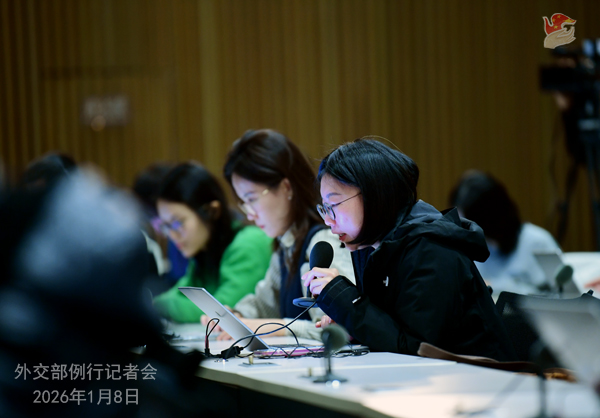
CCTV: On January 6, Volker Türk, UN High Commissioner for Human Rights, published an article in the Guardian. He said that the U.S. military strikes against Venezuela are in contravention of international law and basic principles of the UN Charter. He was deeply disturbed by a narrative that seeks to justify the U.S. military intervention as a response to Venezuela’s human rights record. Türk said “We cannot afford for our rights to be instrumentalised: invoked when they’re convenient, and vilified when they’re not.” On January 7, 16 special procedures of the Human Rights Council released a joint statement and condemned the U.S.’s actions. What’s China’s comment?
Mao Ning: China always opposes turning human rights into political issues and tools, rejects a selective approach on international law, and opposes interfering in other countries’ internal affairs under the pretext of human rights issues. China firmly supports Venezuela in safeguarding sovereignty, security and legitimate rights and interests, and supports all countries in choosing the path to human rights development that suits their national conditions. China stands ready to work with the international community to jointly defend the authority of international law, jointly advocate multilateralism, and uphold world peace and stability.
RIA Novosti: The U.S. European Command said on Wednesday that it had seized the Venezuela-linked oil tanker, which sailed under the Russian flag in the North Atlantic, for an alleged violation of sanctions. The Russian side said that the U.S. actions violate international maritime law and UN conventions. I’m wondering what’s China’s comment on this?
Mao Ning: By arbitrarily seizing other countries’ vessels in the high seas, the U.S. has seriously violated international law. China stands against unilateral illicit sanctions that lack basis in international law or authorization of the UN Security Council, and against any move that violates the purposes and principles of the UN Charter and infringes upon other countries’ sovereignty and security.
Reuters: Some media reported that the founder of the Prince Group, a cross-national scam trafficking group, Chen Zhi was extradited to China. And his case is being investigated by Chinese authorities. Can you confirm this? And can you confirm whether China can still take measures against this person who now apparently has Cambodian nationality. Also, is China working with other law enforcement, for instance, U.S. or UK law enforcement in prosecuting Chen Zhi’s case? Second question, according to media reports, a Chinese hacking group targeted emails linked to staffers of the U.S. House of Representatives. Does China have any comment on this?
Mao Ning: On your first question, competent authorities will release information on the specifics, please stay tuned. Combating online gambling and telecom fraud is the shared responsibility of the international community. For quite some time, China has been actively working with countries including Cambodia to crack down on crimes of online gambling and telecom fraud with notable outcomes. China stands ready to work with neighboring countries including Cambodia to enhance law enforcement cooperation, protect the safety of people’s life and property, and keep the exchange and cooperation between regional countries in order.
On your second question, we have made clear our position more than once on relevant issue. China opposes hacking and combats it in accordance with the law. That said, we are firmly against politically-motivated spread of disinformation on China.
CRI: Foreign Minister Wang Yi is visiting Africa this week, which marks the 36th consecutive year for Chinese foreign minister to kick off the year with a visit to Africa. The IMF several months ago published a book entitled Africa-China Linkages: Building Deeper and Broader Connections. Several U.S. think tanks in their reports also spoke highly of China-Africa cooperation and called for learning from China. Can you share with us the successful experience in developing China-Africa relations?
Mao Ning: Over the past seven decades since the start of diplomatic relations between China and African countries, the two sides have been fighting side by side for national independence, working in solidarity through cooperation as the Global South grows stronger, fighting natural disasters and epidemics together, and pursuing the dream of modernization. The two sides have always been sharing weal and woe and striving for common development. Such effort by China and the vast African countries sets an example of building a new type of international relations, and takes the lead in building a community with a shared future for humanity.
In the new era, President Xi Jinping attaches high importance to developing relations with African countries, and has proposed the principle of sincerity, real results, amity and good faith and the principle of pursuing the greater good and shared interests. President Xi advocates the spirit of China-Africa friendship and cooperation, which features sincere friendship and equality, win-win for mutual benefit and common development, fairness and justice, and progress with the times and openness and inclusiveness. The guidance provided by President Xi leads China-Africa relations to march forward and is the key to the successful China-Africa cooperation.
Both China and African countries are important members of the Global South, stronger solidarity and cooperation between the two sides not only turbocharges the modernization drive of the two sides but also provides new wisdom for tackling global challenges. Africa is a major stage for international cooperation. China stands ready to work with all sides, on the basis of respecting Africa’s sovereignty, to make greater contribution to promoting peace, stability and development in Africa.
RIA Novosti: U.S. Senator Lindsey Graham said that U.S. President Donald Trump has given the greenlight to a bill to strengthen sanctions against Russia, and he said this bill would give Trump leverage against countries like China, India and Brazil to force them to stop buying the cheap Russian oil. What’s China’s comment on this?
Mao Ning: As I just said, China opposes illicit unilateral sanctions. The normal economic, trade and energy cooperation between China and Russia does not target any third party, and should not be disrupted or affected.