People’s Republic of China


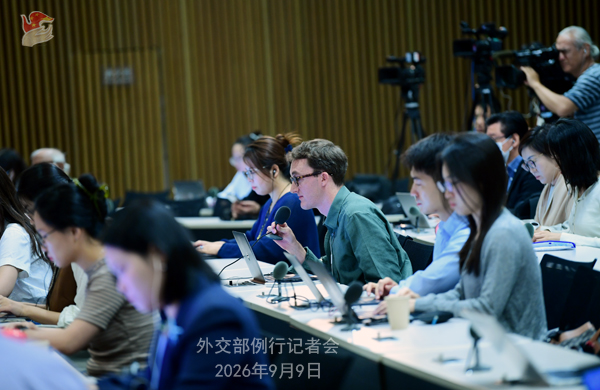
Xinhua News Agency: We noted recent comments saying China only cares for its own development while “pulling up the ladder” for the development of other Global South countries. What is your comment?
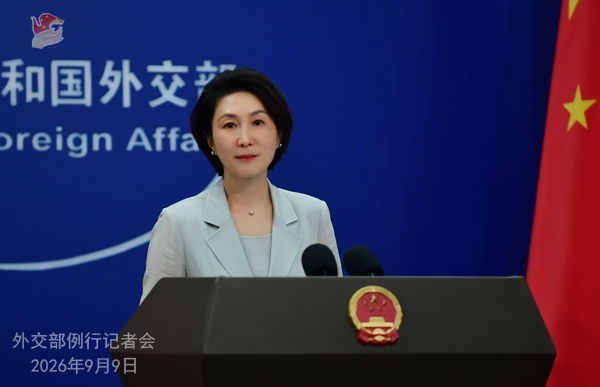
Mao Ning: China never pulls up the ladder from any country. Rather, China has long been building up ladders so that countries could reach higher together. Through high-quality Belt and Road cooperation, for instance, China has been helping partner countries bridge the infrastructure gap. By providing Global South countries with affordable industrial equipment and tech products and sharing experience and expertise, China has helped lower the cost for these countries’ industrial growth. China’s zero-tariff policy and “Export to China” initiative generate profits and market opportunities that enable Global South countries to better integrate into the global supply chains and enhance growth resilience.
For China, cooperation with other countries has always been about mutual success. The “pulling-up-the-ladder” narrative has zero resonance with Global South countries. China will always pursue mutual benefit and common development, be a reliable partner of Global South countries, and contribute to the prosperity of the Global South through China’s own development.
AFP: U.S. cyber security firm Calif said yesterday that it has built an AI-assisted hacking tool that can access the personal accounts and private information on the Chinese app WeChat. Tencent has said that the security risk has been fixed after being notified by Calif. But as a matter of cyber security, does the foreign ministry have comments on this?
Mao Ning: I’m not familiar with the specifics. China stands for promoting AI for good and preventing the abuse and malicious use of AI.
AFP: Yesterday, the U.S. Cyber Defense Agency accused top Chinese AI labs, including DeepSeek and Moonshot of stealing the capabilities of U.S. models. It said that these campaigns “form the core” of China-based AI companies’ strategies. Does the foreign ministry have a comment on this?
Mao Ning: The development of AI in China comes from greater self-reliance and strength in science and technology, and is fueled by China’s vision of extensive consultation and joint contribution for shared benefit and commitment to open cooperation. We believe all parties need to make sure AI development is open and inclusive and promotes the well-being of humanity as a force for good and for all. We hope the U.S. side will earnestly act on the important common understandings reached between the two presidents and stop leveling false allegations to smear China. As two major powers in AI, China and the U.S. should step up cooperation.
NHK: The BRICS Summit will be held in India this weekend. Who will lead the Chinese delegation?
Mao Ning: We will release timely information if there is any update. Please stay tuned.
AFP: At an international forum yesterday, the Defense Secretary of the Philippines Gilberto Teodoro Jr. criticized what he called a violation of UNCLOS and “coercion, bullying and aggression” by China in response to him being handed a piece of paper stating China’s position on the South China Sea. Does the foreign ministry have a comment on the situation or a response to the remarks by the Philippines’ Defense Secretary?
Mao Ning: I’m not sure what exactly happened at the event, but China’s position has always been clear on the so-called “South China Sea arbitration”. The Philippines unilaterally initiated the case, which is a distortion and abuse of the UNCLOS dispute settlement mechanism. It is the Philippine side who has violated UNCLOS and undermined its integrity and authority.
We urge the certain individual of the Philippine side to cut the provocations and theatrics, and stop undermining China-Philippines relations and stability in the South China Sea.