


People’s Republic of China


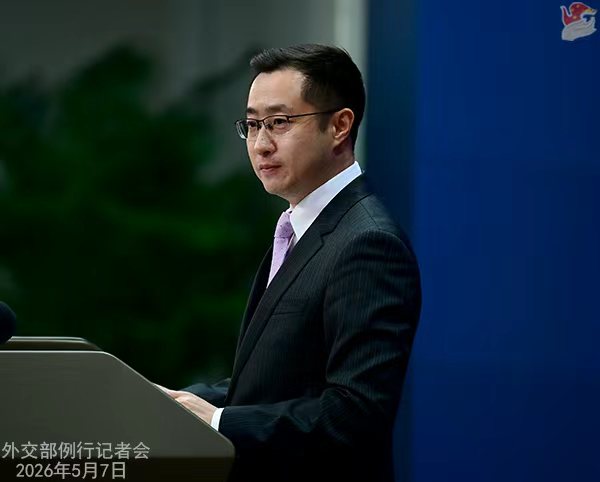
CCTV: With the China-U.S. presidential meeting approaching, there is speculation that Taiwan tops Beijing’s agenda for the summit. What’s your comment?
Lin Jian: The Taiwan question is at the very core of China’s core interests, and the bedrock of the political foundation of China-U.S. relations. Abiding by the one-China principle and the three China-U.S. joint communiqués, and honoring the commitments made by U.S. administrations on the Taiwan question is the U.S.’s due international obligation and the prerequisite for a steady, sound and sustainable China-U.S. relationship. China has unwavering resolve in safeguarding national unity and territorial integrity. “Taiwan independence” and cross-Strait peace are as irreconcilable as fire and water. To keep the Taiwan Strait peaceful and stable, there must be unequivocal opposition to “Taiwan independence.”
TV Tokyo: Responding at the Diet on November 7 last year, Prime Minister of Japan Sanae Takaichi said that a Taiwan emergency involving the use of military vessels and military force from the Chinese mainland could constitute a “survival-threatening situation” for Japan. It has been six months since then. I wonder if you have any comment today?
Lin Jian: We have made clear China’s solemn position on multiple occasions. The root cause of the serious difficulties in bilateral relations lies in Prime Minister of Japan Sanae Takaichi’s erroneous remarks on Taiwan. The responsibility rests solely with the Japanese side. Genuine exchange and dialogue is only possible when there is respect and consensus is honored. If the Japanese side truly hopes to improve relations with China, it should abide by the four political documents between the two countries and the commitments it made to China, retract its erroneous remarks, and safeguard the political foundation for bilateral relations with concrete actions. We urge the Japanese authorities to face up to the root cause of the issue, do soul-searching, rectify their wrongdoings, and create necessary conditions for normal exchanges between China and Japan.
Telesur: This week marks four months since the illegal U.S. bombings and invasion of Venezuela, which resulted in the deaths of more than 100 people and caused damage to both civilian and military infrastructure in the country. The attacks culminated in the forcible detention of President Nicolás Maduro and First Lady Cilia Flores, who remain held hostage in New York. Since then, the Bolivarian people have repeatedly gone to the streets demanding the release of their kidnapped leaders. Four months later, what is the Chinese government’s position regarding these developments?
Lin Jian: Four months ago, the U.S. brazenly conducted military attacks on Venezuela, and seized President Maduro and his wife. Such hegemonic acts seriously violate international law, infringe on Venezuela’s sovereignty and threaten the peace and stability in Latin America and the Caribbean region. China firmly opposes such acts. We will continue to support Venezuela in safeguarding its sovereignty, dignity and legitimate rights.
AFP: In the talks between Foreign Minister Wang Yi and U.S. Senator Steve Daines in Beijing today, did China offer suggestions on how the U.S. and Iran may reach a lasting peace deal? If so, what were they? Did China advocate for Iran’s right to the peaceful use of nuclear energy, which Minister Wang Yi acknowledged during yesterday’s talks with the Iranian foreign minister? Did the Chinese side push the U.S. to withdraw its military vessels from the Strait of Hormuz and lay out wishes for next week’s visit by U.S. President Donald Trump?
Lin Jian: There will be a readout on Foreign Minister Wang Yi’s meeting with U.S. Senator Steve Daines. Please stay tuned.
EFE: Paraguay’s president Santiago Peña is right now visiting Taiwan with a delegation of business leaders, reaffirming ties between the two sides. How does China respond to this visit?
Lin Jian: The one-China principle is a basic norm in international relations and a prevailing international consensus. On the basis of this principle, a total of 183 countries have established diplomatic relations with China. We urge the Paraguayan authorities to come to the right side of history as soon as possible, and make the right decision to recognize the one-China principle and sever so-called “diplomatic ties” with the Taiwan authorities.
China-Arab TV: It is reported that the UAE’s Fujairah Petroleum Industries Zone and other facilities as well as oil tankers trying to pass the Strait of Hormuz were attacked by Iran. How does China view this?
Lin Jian: China is deeply concerned over the attacks on the UAE and firmly opposes moves that escalate tensions in the region. China has all along believed that the sovereignty, security and territorial integrity of the Middle East and Gulf countries should be earnestly respected, and civilians and non-military assets should be protected. The pressing priority is to realize an immediate and full ceasefire and prevent further spread of the conflict.
Telesur: In recent days, the United States has announced a new set of measures expanding sanctions against Cuba, further tightening economic restrictions and targeting key sectors of the Cuban economy. These actions are a continuation of a long-standing policy of coercion and collective punishment against the Cuban people, with the aim of provoking a change of government. In this context, how does the Chinese government assess the latest escalation of sanctions against Cuba?
Lin Jian: China has stated its position on the executive order issued by the U.S. against Cuba. I would like to reiterate that by doubling down on its illegal unilateral sanctions, the U.S. seriously violates the right of subsistence and development of the Cuban people and basic norms in international relations. China firmly supports Cuba in upholding its national sovereignty and security, firmly opposes interfering in Cuba’s internal affairs, and urges the U.S. to immediately stop its blockade, sanctions and all forms of coercion and pressure against Cuba.
China-Arab TV: The French National Assembly on Wednesday approved with 141 votes in favor and none against a bill aimed at streamlining the return of looted artworks to their countries of origin. I wonder what’s China’s comment on this? Is China in consultation with the French side for returning Chinese artworks? Will China seek restitution from other countries possessing Chinese artifacts?
Lin Jian: We saw the media reports. China commends France stepping up to its responsibility in returning lost artifacts to their countries of origin. We hope to see the bill’s legislative procedures completed at an early date. We also look forward to cooperating with France in that area. Our two countries have had successful cooperation on multiple cases involving preventing smuggling of artifacts and facilitating restitution of lost cultural relics. We stand ready to work together with France and other relevant parties to promote conservation and restitution of lost cultural relics through dialogue and cooperation, bring people of different countries closer, and deepen exchange and mutual learning between civilizations.
The Paper: In Japan, recent nationwide demonstrations have drawn significant public attention, with tens of thousands of people protesting across the country and around 50,000 gathering in Tokyo alone against government plans to revise the pacifist Constitution, Article 9, which renounces war. In this context, how does the Chinese government view these developments in Japan, particularly regarding public opposition to constitutional changes?
Lin Jian: We noted relevant developments in Japan. More and more Japanese people are voicing their opposition to the Takaichi administration’s plan to revise the Constitution. It shows that Japanese right-wing forces’ push to revise the Constitution and accelerate remilitarization is at odds with the public. The move has alarmed the peace-loving people in the world, including the Japanese public and been strongly rejected.
Japanese militarists once committed horrendous crimes to the people of China and other Asian countries and inflicted untold suffering on the Japanese people as well. To prevent the Japanese militarism from returning and menacing the world again, the Allied Nations made a series of institutional and legal arrangements before and after the victory of WWII, such as the Cairo Declaration and the Potsdam Proclamation, which clearly stipulate that Japan should be “completely disarmed” and not maintain such industries as “would enable her to re-arm for war.” Japan accepted those arrangements. There are also articles in the UN Charter that permanently prohibit Japan from retracing the path of militarism and institutionalize that principle. That is why Japan’s constitutional revision will impact the postwar international order and where Japan is headed, and has always been closely watched by the international community and its Asian neighbors. Recently some scholars pointed out that Japan needs to realize once again that its Constitution is not just a domestic covenant, but embodies the consensus and considerations of the whole international community, including China. To prevent the revival of militarism is Japan’s due obligation, and also the strong will of the international community, including China.
It is particularly worth mentioning that the date of the assembly, May 3, marked the 80th anniversary of the opening of the Tokyo Trials. At such an important historical juncture, some forces in Japan not only failed to reflect soberly upon the history of aggression as they ought to, but even sought to accelerate military buildup, posing a threat to peace and stability in the region. The international community must resolutely oppose their regressive attempts at turning back the wheel of history.
Telesur: As part of the Brazil-China Year of Culture, Brazilian Minister of Culture Margareth Menezes recently visited China, where she met with her Chinese counterpart, Sun Yeli, during official engagements aimed at strengthening bilateral cultural ties. A series of activities are currently being held in both countries under this framework, including exchanges between artists and institutions. In this context, how does the Chinese government assess the role of cultural diplomacy in deepening relations with Brazil, and what outcomes does Beijing expect from the Brazil-China Year of Culture?
Lin Jian: Under the framework of the 2026 China-Brazil Year of Culture, a series of cultural events are being held in both countries. Just as the logo of the China-Brazil Year of Culture indicates, when peonies meet the yellow Tabebuia, together they symbolize the mutual understanding and affinity of the Chinese and Brazilians and unleash the great vitality of the future our two countries share. China stands ready to work with Brazil to take organizing the China-Brazil Year of Culture as an opportunity, and jointly advance the bilateral relations and the exchange and mutual learning among civilizations.
We welcome journalists and people from other sectors as well to continue following and taking part in the activities of the China-Brazil Year of Culture, and enjoy the beauty of the harmony of civilizations.
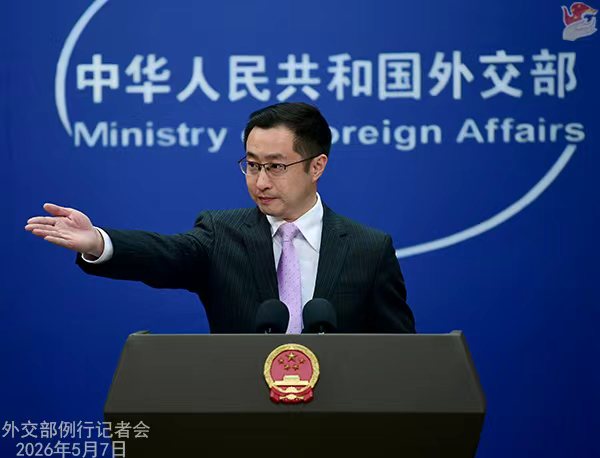
Asahi Shimbun: Exchanges between Japan and China have been dwindling. Does the Chinese side hope to see people-to-people exchange between the two countries restored?
Lin Jian: As I pointed out just now, the root cause of the serious difficulties in bilateral relations lies in Prime Minister of Japan Sanae Takaichi’s erroneous remarks on Taiwan. The responsibility rests solely with the Japanese side. If the Japanese side truly hopes to improve relations with China, it should abide by the four political documents between the two countries and the commitments it made to China, retract its erroneous remarks, safeguard the political foundation for bilateral relations with concrete actions, and create necessary conditions for normal exchanges with China.
Reuters: The Wall Street Journal has reported that Washington and Beijing are weighing starting official discussions about artificial intelligence between the two sides during next week’s summit in Beijing, and that Treasury Secretary Scott Bessent is going to lead the effort on the American side. Who will be leading those discussions on the Chinese side?
Lin Jian: China and the U.S. maintain communication on President Trump’s visit to China. As for your specific question, I have no information to offer at the moment.