People’s Republic of China


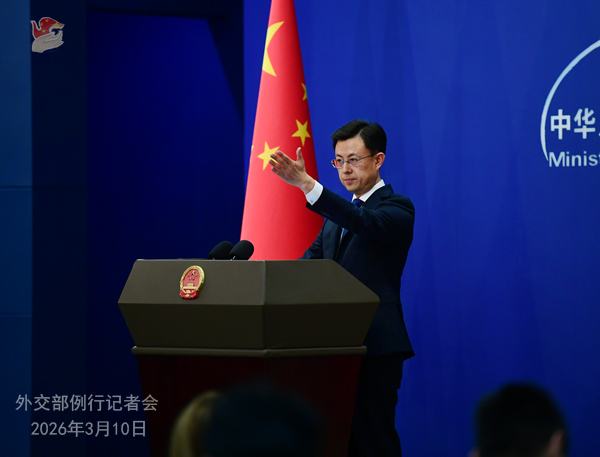
China News Service: We noted that the Foreign Ministry recently released flight information for Chinese passengers stranded in Middle East countries and suggested their prompt return to China. Could you update us about the latest progress?
Guo Jiakun: For days running, the Foreign Ministry has been working closely with the Civil Aviation Administration to boost the flight capacity of domestic airlines to bring back Chinese passengers stranded in the Middle East. China’s diplomatic and consular missions in the region have reached out to their host countries to obtain facilitation for Chinese carriers and have provided timely updates on security alerts and flight information, while looking after the stranded passengers. Through concerted efforts, over 10,000 Chinese passengers have safely returned to China from countries including the UAE, Oman and Saudi Arabia.
As the fighting continues, some airports in the Middle East have yet to fully resume operation. The Foreign Ministry once again urges Chinese nationals not to travel to Iran’s neighboring countries and regions impacted by the military conflict. Our embassies and consulates in the region will do everything possible to provide necessary assistance to Chinese nationals in need.
Al Araby Television Network: Amid the ongoing tense situation in the Middle East, there are concerns in the market that the conflict may protract and destabilize energy production and export passage in the Gulf region. China’s reliance on energy imports from the Middle East also triggers concerns on China’s energy supply security. Some believe that geopolitical rivalry is destabilizing global energy landscape and industrial chains. What’s China’s take on the impact of current geopolitical conflicts on global energy security? In the face of rising external uncertainties, how will China pursue both development and security and ensure both national energy security and long-term development interests?
Guo Jiakun: We are deeply concerned over the continued tensions in the Middle East. Parties need to stop the military operations at once, avoid further escalation, and prevent the regional turmoil from having a greater impact on global economic growth.
Energy security is of vital importance to the world economy. All parties have the responsibility to ensure stable and unimpeded energy supply. China will do what is necessary to protect its energy security. For anything specific, I’d refer you to competent authorities.
Anadolu Agency: Foreign Minister Wang Yi, when talking about the recent conflict in the Middle East during the NPC press conference on the weekend, said this conflict should not have happened in the first place. In phone conversations with counterparts from Kuwait and Bahrain yesterday, Minister Wang said that sovereignty, security and territorial integrity of Gulf countries should be respected as well as Iran. In this situation, what do you think the next step should be? How can this conflict be stopped? Will China, for example, consider a direct appeal to the U.S., the party that initiated the conflict, and tell them to stop the war and return to negotiation?
Guo Jiakun: China is gravely concerned over the ongoing tense situation in the Middle East. Over the past few days, China has carried out intensive mediation efforts. Foreign Minister Wang Yi had phone calls with his counterparts of multiple countries for in-depth exchange of views on the situation in the region. During his press conference at the two sessions, Foreign Minister Wang Yi stressed that to find the right and proper solution to the issues relating to Iran and the Middle East, we need to respect national sovereignty, reject the abuse of force, uphold noninterference in internal affairs, and promote political settlement of hotspot issues, and major countries should play a constructive role and use their strengths in goodwill. These fundamental principles must be observed. As we speak, Special Envoy of the Chinese Government on the Middle East Issue Zhai Jun is in the Middle East to carry out shuttle diplomacy.
To prolong or escalate the conflict does not serve any party’s interest. China will continue to maintain communication with relevant parties, including parties to the conflict, step up mediation, build consensus, and work for the deescalation of the situation.
Asharq News: Given the ongoing Iranian attacks on Saudi Arabia, which have targeted civilian infrastructure and oil facilities, how might these developments impact the Beijing agreement between Saudi and Iran? Could you please give us an update about the visit of the Chinese special envoy to the Middle East?
Guo Jiakun: On your first question, the reconciliation between Saudi Arabia and Iran was truly remarkable. It is the shared strategic asset of all countries in the region, and needs to be doubly cherished.
On your second question, Special Envoy of the Chinese Government on the Middle East Issue Zhai Jun is on a visit to the Middle East. Readouts about his visit to Saudi Arabia have been released on the MFA website, and we will continue to share information about the visit in a timely manner. You may check back for updates.
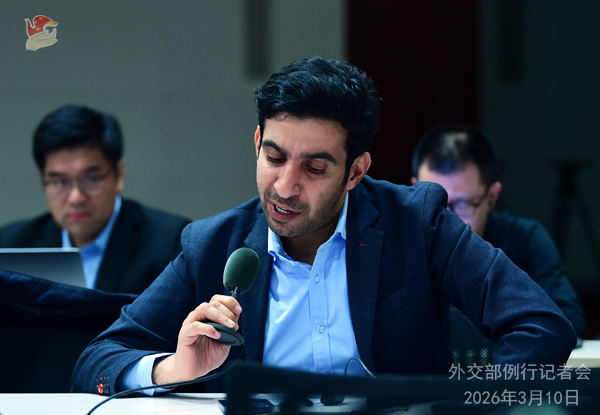
Anadolu Agency: You have mentioned Zhai Jun’s visit to Middle Eastern countries as a diplomatic mission to mediate between regional countries for the solution of this crisis. Can you explain the scope of this mission? Will it be a mediation between just Iran and Gulf countries? Or will it also involve the U.S. and Israel? Which countries will he visit after Saudi Arabia? Can you share his itinerary? And lastly, is there a possibility of an arrangement for the safe passage of oil exports from the Strait of Hormuz? In the context of this visit, is energy security in the Strait of Hormuz an item in the Ambassador’s agenda?
Guo Jiakun: As I just mentioned, the Special Envoy of the Chinese Government on the Middle East Issue Zhai Jun is visiting the region to play a mediation role. Our focus is to help bring about an immediate stop to the military conflict and to bring parties concerned back to the negotiation table. We will release more information about the visit. Please stay tuned.
Regarding issues related to the Strait of Hormuz, the Strait of Hormuz and waters nearby are an important route for international goods and energy trade. Keeping the region safe and stable serves the common interests of the international community. China urges parties to stop the military operations at once, avoid further escalation, and prevent the regional turmoil from having a larger impact on global economic growth.
Anadolu Agency: U.S. President Donald Trump said he already has somebody else in mind to replace Mojtaba Khamenei, Iran’s newly elected leader. What’s China’s comment?
Guo Jiakun: Election of the new Supreme Leader is Iran’s decision based on the country’s Constitution. Non-interference in other countries’ internal affairs is a basic norm in international relations.
Bloomberg: Taiwan is considering selling debt for the first time to finance overseas investments in its foreign partner countries. This is part of the democracy’s efforts to resist the diplomatic isolation imposed by China. Would the Foreign Ministry like to comment?
Guo Jiakun: The DPP authorities often use trade and investment as a front for “Taiwan independence” separatist activities abroad to expand so-called “international space.” Such malignant schemes will not succeed. The despicable tactics of the DPP authorities will never change the fact that Taiwan is part of China, evidenced by both history and law. Nor will it ever undermine international commitment to the one-China principle or stop the complete reunification of the motherland.
AFP: I wonder if you could tell us what’s discussed during the meeting yesterday between the Ministry of Transport and the shipping companies—Maersk and MSC. Did they discuss the Strait of Hormuz?
Guo Jiakun: The competent authorities issued the press release. I’d refer you to them for anything specific.
Anadolu Agency: I want to go back to the Strait of Hormuz question. U.S. President Donald Trump said yesterday “We will strike 20 times harder if Iran does anything to stop the flow of oil within the Strait of Hormuz.” Meanwhile Tehran blames U.S. and Israeli attacks for disruptions to shipping in the region. The international community is concerned that there might be a deadlock here and large amount of Chinese oil imports are passing through this waterway. What will China do if that kind of stoppage and deadlock happen in this critical waterway?
Guo Jiakun: I’ve answered a question concerning that just now. The Strait of Hormuz and waters nearby are an important route for international goods and energy trade. Keeping the region safe and stable serves the common interests of the international community. The pressing priority now is that relevant parties should stop the military operations at once, avoid further escalation and spread of tensions, and prevent the regional turmoil from having a larger impact on global economic growth.
AFP: Some travel agencies and ticket sellers have said the train route from Beijing to Pyongyang in North Korea is going to reopen on Thursday. I wonder if you could confirm this or provide any details?
Guo Jiakun: China and the DPRK are friendly and close neighbors. Maintaining regular passenger train services is important for facilitating exchange between the two peoples. We support closer communication between the competent authorities of both countries to create more enabling conditions for people-to-people exchange.