People’s Republic of China


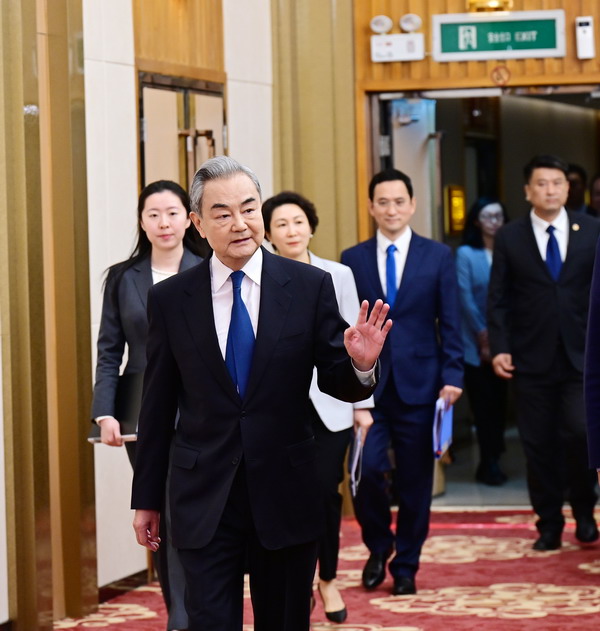
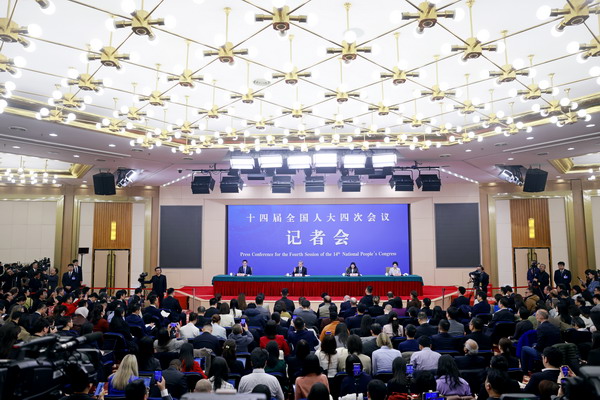
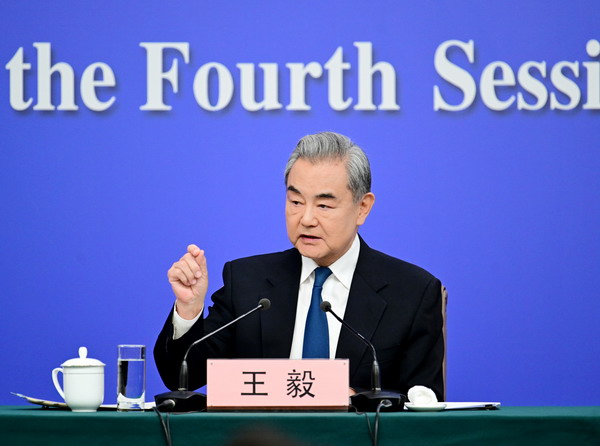
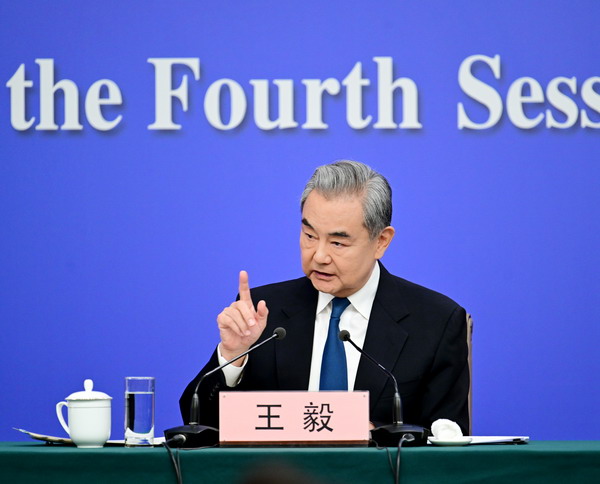
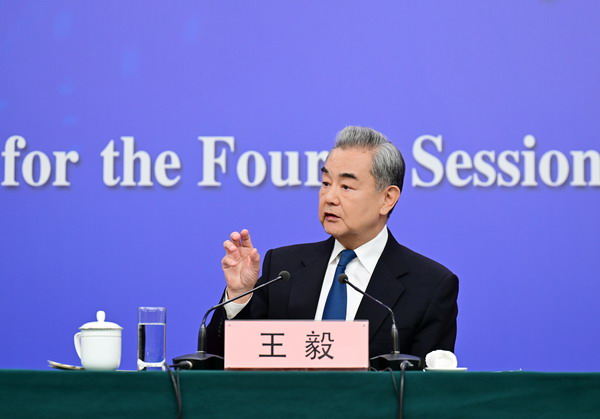
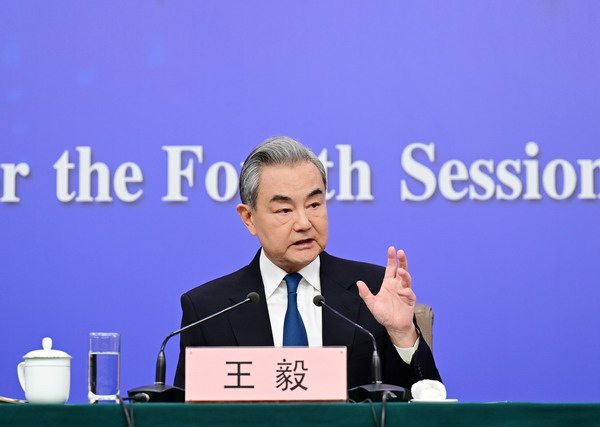
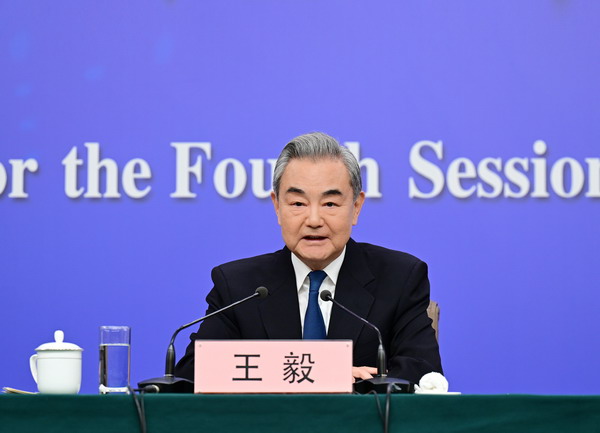
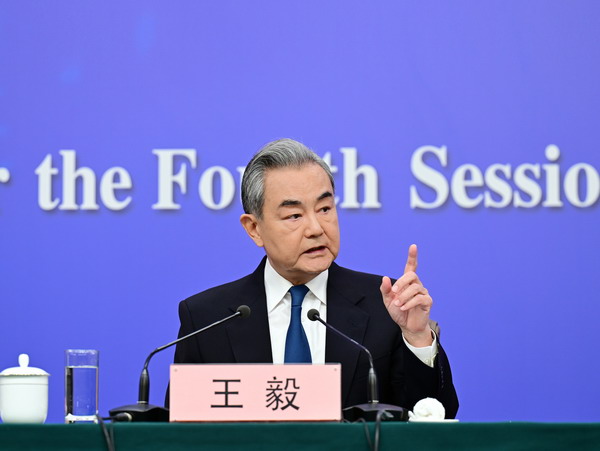
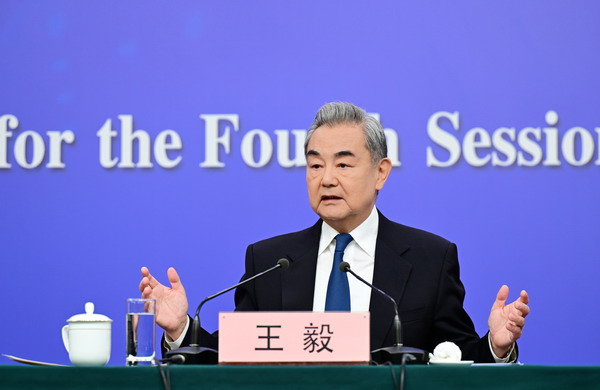
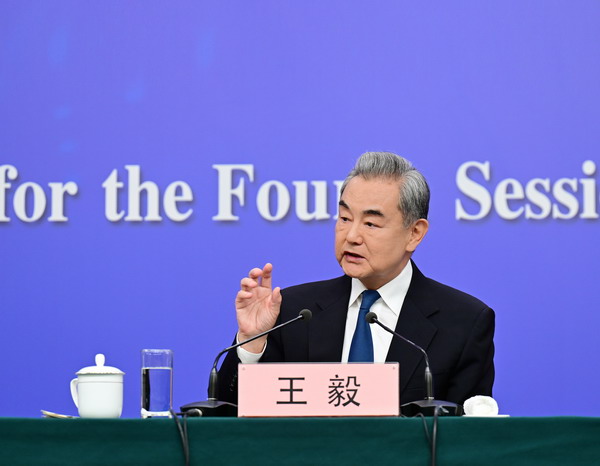
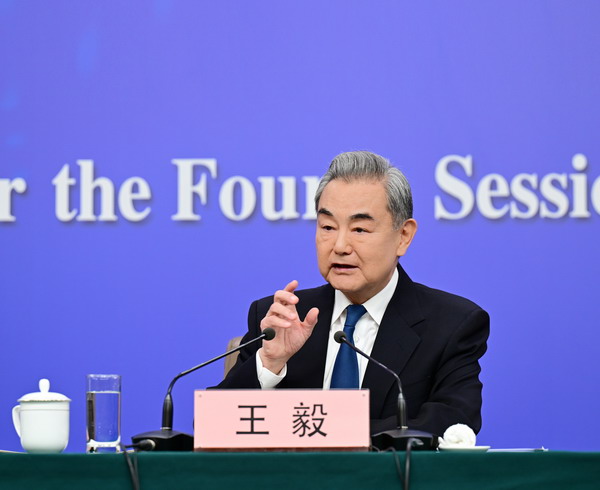
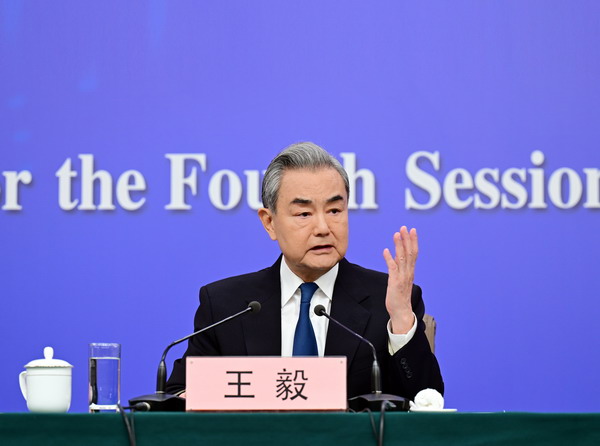
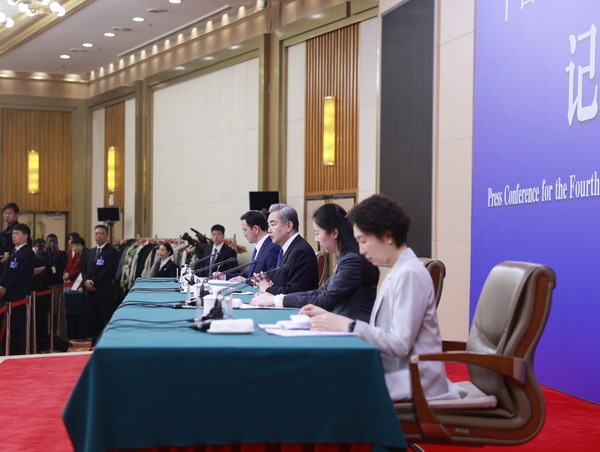
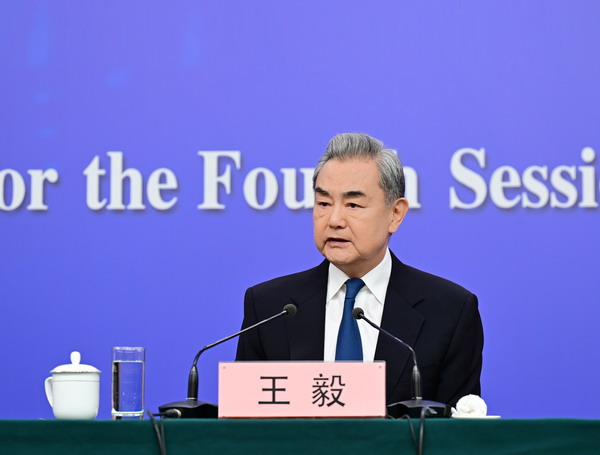
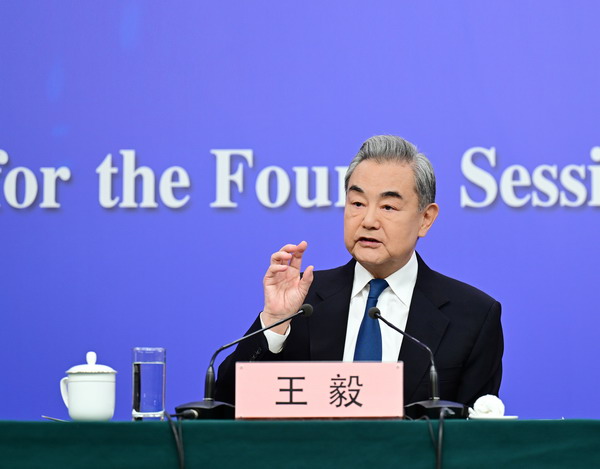
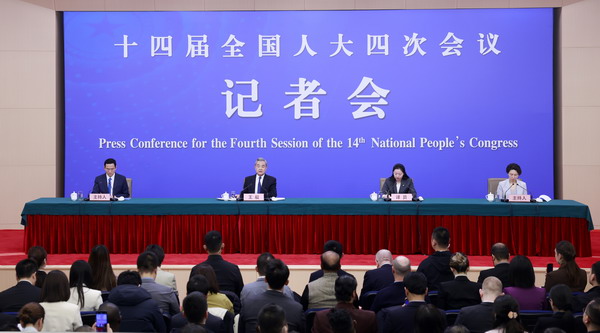
On March 8, 2026, a press conference was held on the margins of the Fourth Session of the 14th National People’s Congress at the Media Center, during which Member of the Political Bureau of the CPC Central Committee and Foreign Minister Wang Yi answered questions from Chinese and foreign media about China’s foreign policy and external relations.
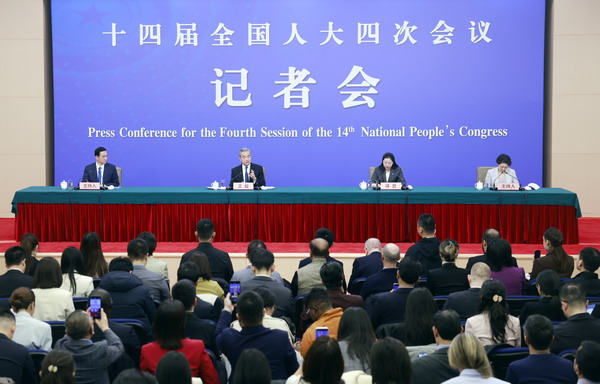
Wang Yi: Friends from the media, good morning. I’m very pleased to meet you again. Today is the International Women’s Day. Let me start by extending warm greetings to all women on this special day. I also want to take this opportunity to express sincere appreciation to friends from the media and people from various sectors of society for your interest in and support for China’s diplomacy. In today’s world, changes unseen in a century are unfolding at a faster pace, transformation and turbulence are intertwined, and wars and conflicts keep flaring up. In today’s China, we are forging ahead at full speed in building a great country, our national rejuvenation is unstoppable, and our country’s international influence is rising steadily. Under the strong leadership of the Central Committee of the Communist Party of China (CPC) with Comrade Xi Jinping at its core, focusing on the central tasks of the Party and the country, and following the guidance of Xi Jinping Thought on Diplomacy, China’s diplomacy firmly safeguards national sovereignty, security and development interests, firmly upholds international rule of law and fairness and justice, firmly opposes all unilateral acts, power politics and bullying, firmly observes and fulfills our international obligations, and firmly stands on the right side of history. As the world’s most important force for peace, for stability and for justice, we have full confidence in the future of humanity. We stand ready to work with all like-minded countries to pursue the noble goal of building a community with a shared future for humanity, and write new chapters of peace, development and win-win cooperation for our times. With that, I’m ready to take your questions.
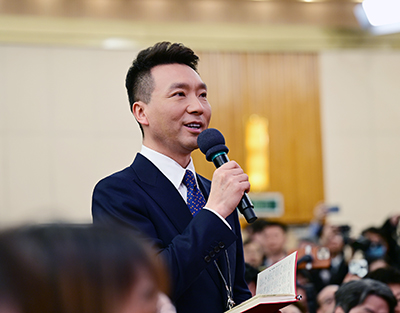 China Central Television: 2025 has been a most extraordinary year in China’s diplomacy. Could you walk us through what was achieved in the head-of-state diplomacy in the past year? What highlights can we expect this year?
Wang Yi: Head-of-state diplomacy is the anchor of China’s diplomacy. Navigating the international landscape over the past year, President Xi Jinping charted a course through rough waters with extensive head-of-state diplomacy, which was captured in a number of historic moments.
President Xi Jinping had important meetings and carried out strategic communication with world leaders over the past year, pioneering new practices of dialogue and coordination between major countries; he visited Southeast Asia, Russia, Central Asia and the Republic of Korea, building up the new momentum of good neighborliness and friendship; he hosted the Shanghai Cooperation Organization Summit in Tianjin and the China-CELAC Forum, gathering new impetus for the great unity of the Global South; he attended a series of commemorations of the 80th anniversary of the victory of the Chinese People’s War of Resistance Against Japanese Aggression and the World Anti-Fascist War, sounding a new, powerful call for safeguarding peace and justice.
Through head-of-state diplomacy over the past year, the international community has had a better understanding of, drawn closer to, and had greater trust in and higher expectation of China. More and more countries have come to see that under the guidance and stewardship of President Xi Jinping, China’s diplomacy provides the most-needed stability and certainty to a world in turmoil and serves as an irreplaceable mainstay amid global turbulence. In particular, the series of important initiatives and propositions put forward by President Xi Jinping demonstrate exceptional strategic foresight and broad global vision. They point out the right way forward for the changes in the world unseen in a century.
In 2026, President Xi Jinping will receive guests from around the world, host major diplomatic events such as the APEC Economic Leaders’ Meeting and the second China-Arab States Summit, and make several important visits abroad. These diplomatic engagements are bound to further advance China’s relations with the world in a positive direction, open up new space for building a community with a shared future for humanity, and enable the Chinese nation to make new, greater contributions to world peace and development.
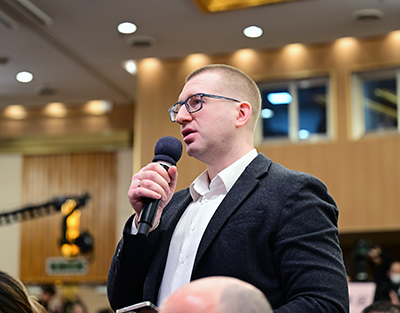 Sputnik News Agency: Given the complex international situation, how will China and Russia, two major countries, counter the attempts to reshape international law and global trade rules?
Wang Yi: This year marks the 30th anniversary of the China-Russia strategic partnership of coordination and the 25th anniversary of the China-Russia Treaty of Good-Neighborliness and Friendly Cooperation. In a fluid and turbulent world, China-Russia relationship has stood rock-solid against all odds.
Why is it able to reach that level? I think the main reason is that the China-Russia strategic partnership of coordination has been based on equality, respect and mutual benefit since day one. It embodies the essence of a new type of international relations. It represents the direction of a new type of major-country relations.
China and Russia are strategically independent. We always respect each other’s core interests, do not impose the will or agenda of one on the other, and keep to the principle of non-alliance, non-confrontation and not targeting any third party.
China and Russia share a high degree of political mutual trust. Working back-to-back lies at the heart of this relationship. And the strong strategic resilience enables it to defy any external instigation or pressure.
China and Russia act in close coordination. In major international and regional affairs, China and Russia share the broadest strategic consensus and closest strategic coordination, including defending international rules and order you asked about.
Through 80 years of wind and rain, the post-World War II international order has once again come to a crucial juncture. Last year, the heads of state of China and Russia attended the commemorations of the victory of the Anti-Fascist War in each other’s countries, and the two sides issued three important joint statements on deepening comprehensive strategic coordination, cementing global strategic stability and upholding the authority of international law. This has sent a clear message to the world about resolutely upholding the correct view of history on World War II, safeguarding the fruits of the victory of the War and opposing unilateral bullying acts. Eighty years ago, China and Russia together contributed to the building of the postwar order. Today, 80 years on, China and Russia together will add momentum to the advent of a multipolar world.
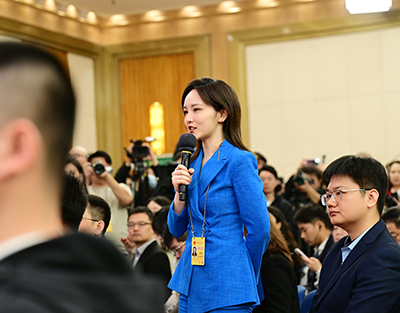 Shenzhen Satellite TV: China has announced that the APEC Economic Leaders’ Meeting will be held in Shenzhen in November this year. What important outcomes will the meeting deliver?
Wang Yi: This year is the APEC China Year. We will host APEC for the third time. From Shanghai in 2001 and Beijing in 2014 to Shenzhen this year, APEC in the past 25 years has experienced ups and downs in regional cooperation and witnessed China’s unwavering commitment to growing together with the Asia Pacific.
To be a good host, China will focus on one central objective throughout the whole year, that is, to translate the goal of building an Asia Pacific community into action and turn its blueprint into reality. Decades have passed since the concept of Asia Pacific community was first put forward. This idea must not stay on paper or remain just a vision. We hope to find an answer in Shenzhen that delivers broad consensus, clear priorities and workable steps, so that people in the region can associate with and get into action in building an Asia Pacific community.
Through intensive communication with all parties, we have decided on this year’s APEC theme, that is, “Building an Asia Pacific Community to Prosper Together.” APEC Shenzhen will focus on the three priorities of openness, innovation and cooperation, and, once again, chart the course and rally strengths for Asia Pacific cooperation at the crossroads. We will construct the main pillars of an Asia Pacific community, align different pathways toward the Free Trade Area of the Asia Pacific, make appropriate arrangements for regional connectivity, and vigorously promote the transformation toward digital, smart and green development. Throughout the year, the Chinese side will host over 300 events in cities across the country, with the participation of multiple Chinese provinces and municipalities. All APEC member economies will have the opportunity to contribute.
Shenzhen is an important window on China’s reform and opening up, a brilliant showcase of socialism with Chinese characteristics, and a frontier of innovation in the Guangdong-Hong Kong-Macao Greater Bay Area. We stand ready to work with all sides to promote a restart from APEC Shenzhen toward the goal of an Asia Pacific community.
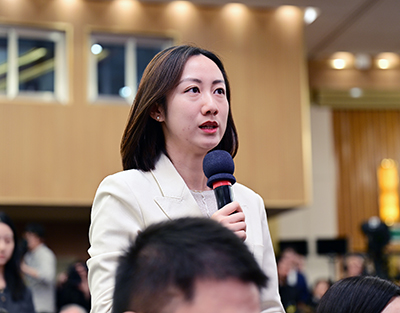 Phoenix TV: The U.S. and Israel have again launched military strikes on Iran. The conflict is spreading to the entire Middle East region. What solution does China propose on the Iran issue?
Wang Yi: This is an issue that everyone is concerned about. It is also the focal point in the current international situation. China’s attitude on this issue is objective and impartial. We have stated our principled position on multiple occasions, which can be summarized into one key message, that is, to bring about ceasefire and end hostilities. Ancient Chinese wisdom warns that weapons are ominous tools, and should not be used without discretion. Seeing the Middle East engulfed in flames, I want to say that this is a war that should not have happened—it is a war that does no one any good. The history of the Middle East tells the world time and again that force provides no solution and armed conflicts will only increase hatred and breed new crises. Once again, China calls for an immediate stop to military operations to avoid the spiraling escalation of the situation and prevent the conflict from spilling over and spreading.
China is of the view that to find the right and proper solution to the issues relating to Iran and the Middle East, the following fundamental principles must be observed:
First, respecting national sovereignty. Sovereignty is the cornerstone of the current international order. We believe that the sovereignty, security and territorial integrity of Iran and all countries in the Gulf region should be respected and must not be violated.
Second, rejecting the abuse of force. Might does not make right. The law of the jungle must not return and rule the world. Wilful use of force does not prove one’s strength. Civilians are innocent and should not be victimized.
Third, noninterference in internal affairs. The people in the Middle East are the true master of this region. Middle Eastern affairs should be determined by regional countries independently. Plotting color revolution or seeking regime change will find no popular support.
Fourth, promoting political settlement of hotspot issues. China always believes that peace is the most precious. All sides should return to the negotiating table as quickly as possible, resolve differences through equal dialogue, and make efforts for realizing common security.
Fifth, major countries should play a constructive role and use their strengths in goodwill. Another ancient Chinese adage reads, when benevolence and justice are not practiced, the position of strength shifts. Major countries should act in the spirit of justice and righteousness, and contribute more positive energy to peace and development of the Middle East.
As a sincere friend and strategic partner, China stands ready to work with Middle Eastern countries to implement the Global Security Initiative, and restore order to the Middle East, restore tranquility to the people, and restore peace to the world.
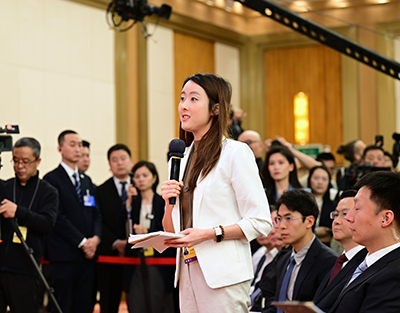 Channel News Asia: China proposed the Global Governance Initiative last year alongside its participation in mechanisms such as the Shanghai Cooperation Organization and BRICS. Some observers interpret this as China signaling a desire to play a bigger role in global governance and see this as a direct response to Western-led policies and frameworks. How would you respond to that interpretation?
Wang Yi: In today’s world, challenges of a global nature keep emerging, the governance deficit becomes more prominent, and multilateralism is under severe shock.
The Global Governance Initiative (GGI) put forward by President Xi Jinping could not be more timely and was quickly echoed by over 150 countries and international organizations. The U.N. Secretary General commented on the spot that the core concepts of the GGI align closely with the values upheld by the U.N. China then initiated the Group of Friends of Global Governance which was launched successively at the U.N. Headquarters in New York and its office in Geneva. Many countries, especially Global South countries, joined the group with great enthusiasm.
Why is the GGI able to draw such widespread response? I believe the key lies in the five major principles advocated by the GGI, namely, sovereign equality, international rule of law, multilateralism, a people-centered approach and real actions. They meet the common expectations of the international community and reflect the shared aspirations of people from all countries.
The most explicit message of the GGI is that the leading status of the U.N. must be upheld, not challenged; the central role of the U.N. must be strengthened, not weakened. The U.N. is not perfect, but without the U.N., the world would only be worse. Creating parallel structures outside the U.N. or, worse still, putting together various exclusive blocs and circles is unpopular and unsustainable.
The most unequivocal requirement of the GGI is that the U.N. must keep pace with the times, improve its governance system through reform, and adapt to the evolving international situation and the changing dynamics in the global balance of power in the 21st century. In particular, it should enhance the voice and representation of countries of the Global South, and better reflect the legitimate demands of developing countries. The goal is to build a more just and equitable global governance system.
China is a founding member of the U.N. and a staunch defender of its cause. As the largest developing country, China is more conscious of the ardent expectations of Global South countries. Both the Shanghai Cooperation Organization and the BRICS, which China took part in building, take abiding by the U.N. Charter as their primary guideline, and both are exploring and accumulating useful experience for reforming and improving global governance. China calls on more countries to participate in and support the GGI, and to work together to revitalize the U.N., defend the U.N. and make the U.N. stronger.
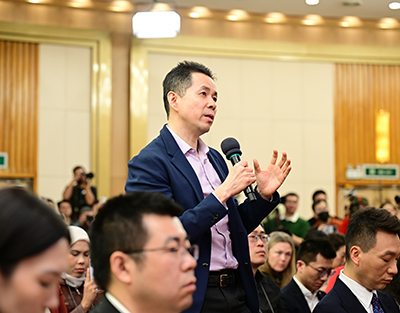 CNN: Since Donald Trump’s return to the White House, U.S.-China relations have been tumultuous, so his plan to visit Beijing later this month has been highly anticipated. Given this, how will the ongoing U.S.-Israeli strikes on Iran affect this trip? And what does China want out of this visit and what are your expectations of bilateral ties after the visit?
Wang Yi: The relationship between China and the United States is one of far-reaching and global implications. Turning our backs on each other would only lead to mutual misperception and miscalculation. Sliding into conflict or confrontation could bring disaster to the world. China and the U.S. are both big countries. Neither side can remodel the other, but we can choose how we want to engage, that is, to commit to a spirit of mutual respect, to hold the bottom line of peaceful coexistence, and to strive for the prospect of win-win cooperation. That’s what serves the interests of Chinese and American peoples, and that’s also the expectation of the international community.
It is heartening to see that the presidents of the two countries have led by example. By maintaining good interactions at the top level, they have provided important strategic safeguard for the China-U.S. relationship to improve and move forward, and they have brought the relationship back on an even keel after the ups and downs. This year is a “big year” for China-U.S. relations. The agenda of high-level exchanges is already on the table. What the two sides need to do now is to make thorough preparations accordingly, create a suitable environment, manage the risks that do exist, and remove unnecessary disruptions. China is always committed and open. It is critical that the U.S. side work in the same direction. I believe that when the two sides treat each other with sincerity and good faith, we will be able to lengthen the list of cooperation, and shorten the list of problems; we will be able to, under the strategic guidance of the two presidents, produce results that are satisfactory to both peoples, achieve consensus that is welcomed by the whole world, and make 2026 a landmark year of sound, steady and sustainable development of China-U.S. relations.
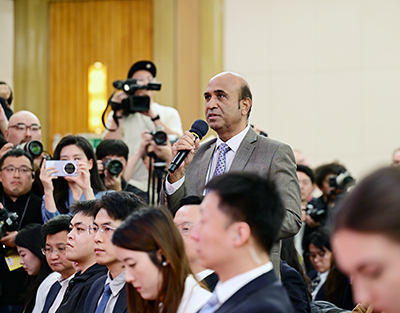 Associated Press of Pakistan: China’s neighborhood has not been tranquil last year as several countries experienced change of government and tensions and disputes between regional countries were on the rise. How does China view the situation in the region?
Wang Yi: Neighbors helping neighbors and building an amicable neighborhood is part of Chinese tradition and culture. China always places the neighboring region in a priority position of its diplomatic agenda. President Xi Jinping has put forth the principle of amity, sincerity, mutual benefit and inclusiveness for China’s neighborhood diplomacy in the new era. Last year, the CPC Central Committee held the first conference on work related to neighboring countries, which set the goal of building a community with a shared future with neighboring countries. This shows that our understanding of and commitment to the neighboring region are deepening, and this is also welcomed and supported by the neighboring countries.
The world is entering a period of turbulence, but Asia has managed to maintain overall stability and rapid growth, contributing over 60 percent of global growth in the past year. This is no easy feat, but a result of the collective efforts of China and the neighboring countries. Surely, there are often political changes within countries in the region, and complex, sensitive issues left from history still exist between countries. But the underlying character of good-neighborliness and friendship remains unchanged, and the prevailing trend of win-win cooperation remains unchanged.
A key factor underpinning peace and stability in the region is China’s steadfast commitment to the policy on fostering an amicable, secure and prosperous neighborhood, to the principle of amity, sincerity, mutual benefit and inclusiveness, to the vision of shared future for humanity, and to open regionalism and true multilateralism. Imagine this: Should China act like some traditional powers bent on carving out spheres of influence, provoking camp-based rivalry and even adopting a beggar-thy-neighbor approach, would Asia still be as stable as it is today? Would the international community still be able to benefit from the development opportunities of Asia? Facts show that China is always an anchor for regional security, an engine for development and prosperity, and a champion of the shared values of Asian countries. We are happy and proud to play this role, and we stand ready to step up such efforts in the future.
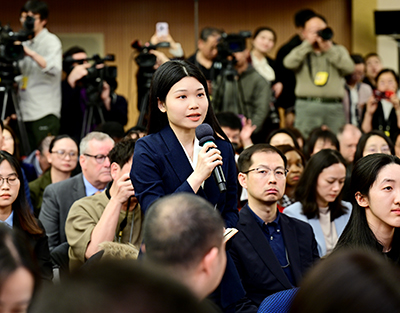 China News Service: As more Chinese enterprises go global and more citizens travel abroad, Chinese interests overseas are growing, which means greater responsibility of serving the people through diplomacy. How will the Foreign Ministry better protect the legitimate rights and interests of Chinese people and businesses overseas?
Wang Yi: Serving the people is the abiding mission of the diplomatic work of the People’s Republic of China, and strengthening the system of safety protection for Chinese nationals and interests overseas is the unremitting pursuit of the Chinese foreign service in the new era.
In the past year, we dealt with more than 100 major emergencies involving Chinese nationals and institutions overseas, processed over 79,000 cases in which consular protection and assistance are needed, handled over 600,000 phone calls via the 12308 consular hotline, issued over 3,000 overseas security alerts, secured the release of more than 50 Chinese compatriots kidnapped in Africa, and worked with neighboring countries to crack down on online gambling and telecom fraud, bringing back tens of thousands of individuals.
In the past year, we firmly protected the legitimate and lawful rights and interests of Chinese companies abroad, and urged governments of host countries to protect the safety of Chinese personnel and projects. At the same time, we resolutely countered unwarranted suppression targeting Chinese companies, and helped them strengthen risk preparedness and the ability to defend their interests through legal means. Our diplomats have a strong sense of mission. Some of them are stationed for years in regions affected by conflicts and turmoil; some are exposed to a high risk of diseases everyday; and some work and live in modified shipping containers or high-altitudes, low-oxygen environment. But they fulfill their duties with no complaint or regret. As we speak, our embassies and consulates in Iran and other Gulf states are working hard to ensure the evacuation and safety of Chinese nationals. Let me put it this way: Where there is the Chinese flag flying, there are Chinese diplomats on duty; where there is want or need from Chinese compatriots, there is heart-warming care of the Party and the government.
I want to say this to all fellow Chinese abroad: While you may be facing a world of chaos and turbulence, you have behind you a motherland as firm as a rock. We will, as always, put our people first, further strengthen overseas security protection capabilities, and build a security risk prevention system that covers the entire globe.
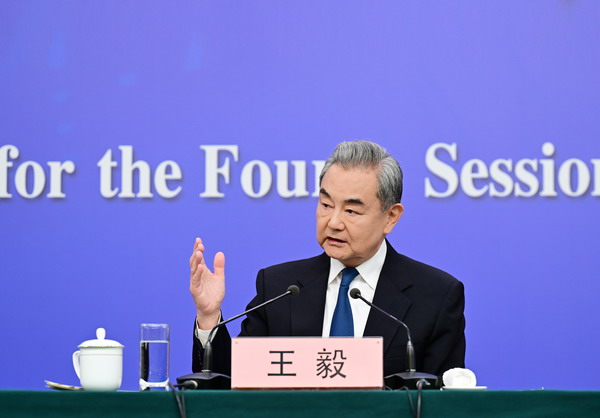
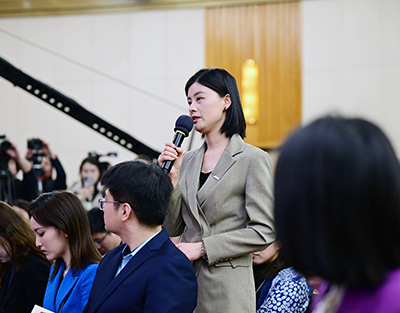 China Daily: How do you see the leading role of Global South countries in the reform of the global governance system? In a year marked by major transformation in the international landscape, the rise of unilateralism, and the law of the strongest, how can the Global South realize strength through unity that China has been promoting?
Wang Yi: The collective rise of the Global South is the distinct hallmark of the great transformation unfolding in the world. Over the past 40 years, its share of global economy has grown from 24 percent to over 40 percent. It has become a key driver of multipolarity in the world.
Right now, hegemonism and power politics are asserting themselves and dealing a heavy blow to the international order. The Global South countries should increase communication and coordination, jointly defend our legitimate rights and interests, and work together to expand the space for independent development.
The Global South is an emerging, positive force for good on the international stage. In a changing and more turbulent world, we should forge greater confidence and unity, pull together and jointly champion peace, development, cooperation and win-win outcomes. We should make good use of important platforms such as the BRICS, the Shanghai Cooperation Organization and “the Group of 77 and China”, to speak up for peace and empower development.
Multilateralism is vital for Global South countries. We should encourage the international community to practice true multilateralism and uphold the U.N.-centered international system and the international order based on international law. We must always ensure that world affairs are discussed and handled by all nations, and international rules formulated by all countries.
The Global South needs an open and cooperative international environment for development. We should advocate a universally beneficial and inclusive economic globalization, foster an open world economy, firmly uphold the multilateral trading system, and promote openness to share opportunities and achieve win-win outcomes.
China’s heart is with the Global South; China’s root is in the Global South. We are ready to join hands with other Global South countries to journey on toward modernization and advance the building of a community with a shared future for humanity.
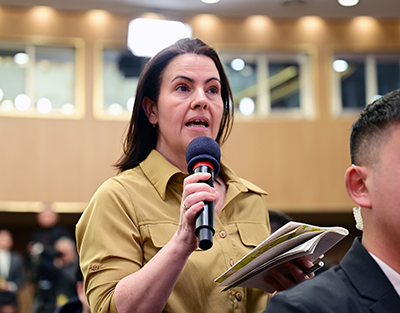 EFE News Agency: The return of Trump has forced Europe to reassess its reluctance toward China, and in recent months several European leaders have visited Beijing. Does China view this as a sign of greater strategic autonomy in Europe?
Wang Yi: Since last year, relations between China and European countries have been regaining strength. Two-way trade topped US$1 trillion, over two million European tourists traveled here under visa-free policies, and, on top of that, European leaders paid a number of visits to China. Interactions are more active. A host of new cooperation agreements have been reached. Facts have shown that China-Europe relations draw stability from shared interests and certainty from mutually beneficial partnerships.
China has a clear stance on developing relations with Europe. We consistently believe that Europe should naturally be a pole in a multipolar world, that Europe is an important force underpinning the stability of the international order, and that Europe is a key partner for China in our modernization. For China-Europe relations to stay steady and sound, it is crucial for Europe to have a correct perception of China. We are witnessing a growing consensus among wise minds in Europe that China is not a competitor but a global partner. This is especially true among young people. They are looking at China in a more objective and positive way.
In trade and economic ties, China and Europe are mutually complementary. A dynamic balance is entirely within reach amid growing ties. As testified by the facts in China-Europe cooperation, interdependence is not a risk; intertwined interests are not threats; openness and cooperation will not weaken economic security; but building walls and barriers will only lead to self-isolation. We are glad to see European friends stepping out of the “small attic” of protectionism and walking into the “fitness club” of the Chinese market to build their strength and competitiveness.
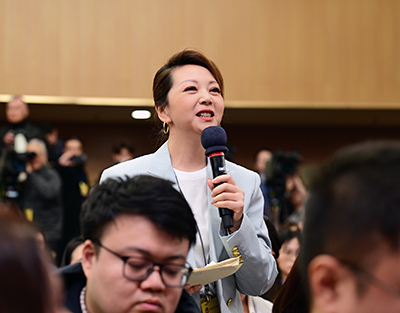 CGTN: The Palestinian-Israeli conflict is dragging on and the ceasefire in Gaza is fragile. The U.S. has created a Board of Peace to deal with the Gaza issue and postwar arrangements. How will China promote the true resolution of the Palestinian question?
Wang Yi: The situation in Gaza tests the very foundation of international justice. The international efforts that enabled the ceasefire are welcome, but hard work still lies ahead to consolidate the ceasefire, advance reconstruction, and find a comprehensive and lasting solution to the question of Palestine.
There is only one equitable and widely-recognized solution to the Palestinian question, which is the two-State solution. Any other arrangements or new mechanisms must reinforce—rather than undermine—the two-State solution. The international community should not allow the Palestinian question to be marginalized again. The U.N. has a greater responsibility to play a lead role in driving the process.
Turmoil and war need not be the fate of the Palestinian people. Like people elsewhere, they have a legitimate right to be free from war and to enjoy peace and development. As a responsible major country, China will continue to support Palestine’s just cause of pursuing legitimate national rights, and facilitate international efforts to restore justice to the Palestinian people.
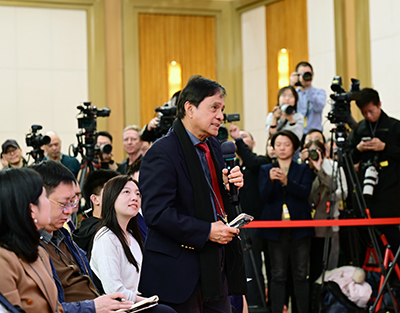 NBC: Would China accept a “G2” format as a framework for China and the U.S. to address global challenges? If not, what alternative framework would you propose that will prevent confrontation with the U.S. and assure the world that China’s rise is not aimed at overturning the current international system?
Wang Yi: There is no doubt that China and the United States have a significant impact on the world, but we should not forget there are more than 190 countries on our planet. World history has always been written by many countries together, and the future of humanity will be forged through the collective efforts of all nations. Diversity is the inherent nature of human society, and multipolarity is what the international landscape should look like.
Back in history, every great-power rivalry and bloc confrontation invariably inflicted disaster and pain on humanity. Therefore, China will never take the beaten path of seeking hegemony as its strength grows, nor do we subscribe to the logic that the world can be run by major countries. China has inscribed in its Constitution that it follows an independent foreign policy and is committed to pursuing a path of peaceful development. Chinese leaders have often declared to the world that no matter how the international situation evolves and how strong China becomes, it will never seek hegemony or expansion.
As for how the international landscape should evolve, China’s proposal is to build an equal and orderly multipolar world. “Equal” means every nation, regardless of size or strength, is an equal member of the international community, and can find its place and play its role in a multipolar world. “Orderly” means all countries should uphold the widely recognized international rules, namely the purposes and principles of the U.N. Charter and the basic norms of international relations.
Building an equal and orderly multipolar world should be the common responsibility of all countries. With more resources and capabilities, major countries should be more generous, shoulder more responsibilities, and set an example of observing rules, honoring commitments and upholding international law. China will continue to play a constructive role in the changing world, and work with all countries toward a multipolar future.
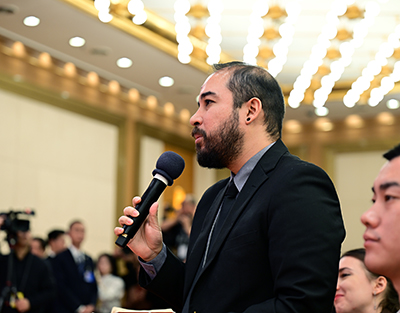 Brasil de Fato: The National Security Strategy of the U.S. released last year shows that the U.S. priority is to interfere in China-Latin America relations by pressuring Latin American countries. How will China respond to this challenge?
Wang Yi: Old scripts from the 19th century shouldn’t be acted out on the international stage of the 21st. The resources of Latin America and the Caribbean (LAC) belong to the people there, the path of LAC countries should be chosen by their people, and the choice of friends is a decision for LAC countries alone.
China-LAC cooperation is about the mutual help and support between Global South countries. China-LAC relations grew significantly in the past 50-plus years. The key lies in the fact that China always respects Latin American people and commits to equal treatment and mutual benefit with LAC countries. We never engage in geopolitical schemes, nor interfere in other countries’ internal affairs, nor ask others to pick sides. At last year’s Ministerial Meeting of the China-CELAC Forum, we jointly launched five programs for solidarity, development, civilization, peace, and people-to-people bonds, drawing a blueprint for China and LAC countries’ joint march toward modernization.
Cooperation between China and LAC countries does not target any third party and should not be subject to interference by any third party. We have great confidence in the future of China-LAC relations. No matter how the situation evolves, China stands ready to work with LAC countries toward building a China-LAC community with a shared future, and spreading the benefits of our comprehensive cooperative partnership to more people on both sides.
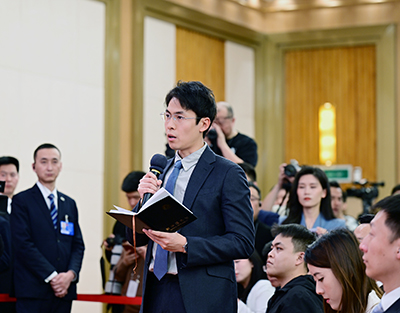 Xinhua News Agency: What new measures will the Foreign Ministry take in connection to the 15th Five-Year Plan to contribute to the advancement of Chinese modernization through high-quality development?
Wang Yi: The 15th Five-Year Plan offers a new blueprint for China’s development and a new vision of win-win cooperation with the rest of the world. This is the first year of its implementation. China’s diplomatic service will actively coordinate resources at our disposal to create a more favorable international environment for China’s high-quality development and modernization. There are three priorities.
First, we will continue to be an enabler of high-standard opening up. Leveraging high-level exchanges and major diplomatic events, we will continue to facilitate high-quality development of the Belt and Road Initiative, expand the network of high-standard free trade areas, keep industrial and supply chains stable and smooth, and secure a fair, open and non-discriminatory environment for Chinese companies operating abroad.
Second, we will continue to expand the fast track for people-to-people exchanges. To date, we have granted unilateral visa exemption to 50 countries and made mutual visa-free entry arrangements with 29 countries. Last year, as many as 73 percent of visitors came visa-free. Going forward, we will continue to refine cross-border travel policies, further leverage the benefits of visa-free entry, and upgrade support services. The goal is to both make it more convenient and comfortable for foreigners to travel and stay in China, and make it safer and smoother for Chinese citizens to travel abroad.
Third, we will continue to open new windows of connectivity. We will innovate and upgrade the program of “Beyond the Capital” diplomatic tour, and speed up the building of an information platform for high-quality development envisioned by the 15th Five-Year Plan. These efforts will help China’s subnational entities better access global resources, share governance experience, and expand international cooperation. In this way, the diplomatic service will be able to better empower development across the country.
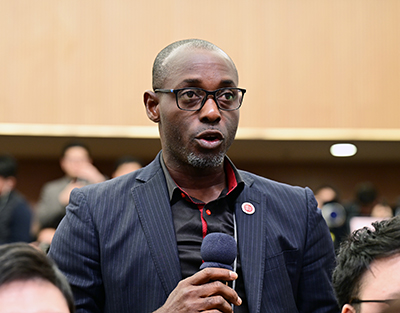 News Agency of Nigeria: This year marks the 70th anniversary of the beginning of diplomatic relations between China and African countries. This year is also designated as the China-Africa Year of People-to-People Exchanges. In this year of special significance, how do you expect China-Africa relations to further grow and deliver for the two peoples?
Wang Yi: For 70 years, China-Africa friendship has stood the test of changing international circumstances and shown strong vitality. For 36 years, China’s foreign minister has kicked off the year with a visit to Africa, a tradition that has been honored rain or shine. This consistency reflects the spirit and commitment of China’s diplomacy. During my visit to Ethiopia early this year, people fondly recalled the touching scenes of Premier Zhou Enlai’s visit to Africa. Then in Tanzania, people still cherished the memory of Chinese assistance in building the Tazara Railway. They remember the young Chinese engineers and workers who laid down their lives for it and never made it home. It’s no exaggeration to say that China-Africa friendship has been passed down from generation to generation—forged heart to heart, and built with sweat and blood.
In this new era, President Xi Jinping still deeply values the bond with Africa. He emphasizes sincerity, real results, amity and good faith in working with Africa—always reminding us of our friendship and shared interests with the continent. This approach has helped to take China-Africa cooperation to new heights. We’re just two months into 2026 and already President Xi Jinping has sent three letters or messages to our African brothers: a letter of congratulation on the launch of the China-Africa Year of People-to-People Exchanges, a reply to veterans of Zimbabwe’s liberation struggle, and a congratulatory message to the African Union Summit for the 14th year running. It’s clear from these messages that China’s top leader wants the torch of China-Africa friendship to be passed from generation to generation, and Africa can count on China’s steadfast support for its development and revitalization.
This year, China-Africa relations will see many new developments, three of which I’d like to draw your attention to.
First, fresh steps in building the China-Africa community with a shared future. We will host multiple African leaders to strengthen mutual support as all-weather partners and write a new chapter of our shared journey.
Second, full implementation of zero-tariff access for 100 percent of African imports as from May 1. As part of China’s commitment to high-standard opening up, we are removing tariffs completely to boost trade, multiply benefits for the people, and help Africa access the enormous opportunities of the Chinese market.
Third, the nearly 600 exciting events to take place under the China-Africa Year of People-to-People Exchanges. We are always ready to work with our African brothers and sisters to draw inspiration from our civilizational heritages, forge a stronger bond between our people, and carry forward our friendship for many, many generations to come.
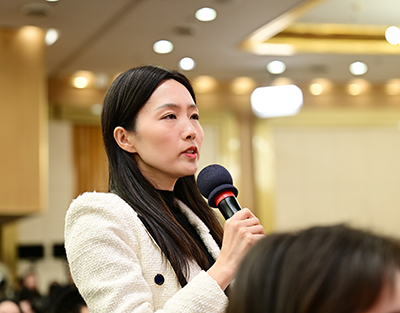 People’s Daily: Faced with a backlash against globalization, how will China resist protectionism, better share opportunities with the world, and lead the sustained and steady growth of the world economy?
Wang Yi: The world economy is facing headwinds, and globalization is suffering a backlash. A certain country is erecting tariff barriers and pushing economic and technological decoupling. This is no different from using kindling to put out a fire—you will only get burned. President Xi Jinping has reminded everybody that it’s impossible to channel the vast ocean of the global economy back into isolated lakes—it runs counter to the tide of history. Pursuing protectionism is akin to locking oneself in a dark room; it may keep out wind and rain, but it also shuts out light and air.
The problems facing economic globalization can only be addressed through more sustainable development and more equitable and effective governance. To this end, President Xi Jinping has called for promoting an economic globalization that is universally beneficial and inclusive. The goal is to make the pie of economic globalization bigger and, more importantly, divide it more fairly. The principle is to leave no country behind, and halt the widening wealth gap. The pathway is to encourage countries to draw on each other’s strengths and share opportunities through economic openness, and pursue common development and enable each other’s success as interests converge.
China not only talks the talk but walks the walk. Over the past five years, its economy has grown at an average annual rate of 5.4 percent—accounting for around 30 percent of global growth, greater than the contribution of the G7 Western countries combined. China is the world’s largest potential consumer market and the biggest emerging economy. Underpinned by better conditions supporting a positive, long-term outlook and a stronger trend of sustainable growth, China will remain the most stable engine of the global economy.
A country’s greatness lies in serving the greater good. China will expand high-standard opening up as not only “the world’s factory” but also “the world’s market.” China is strongly committed to supporting trade and investment liberalization and facilitation, keeping global industrial and supply chains stable and smooth, upholding the WTO-centered multilateral trading system, and defending a fair and open economic and trade order. The world can count on China to deliver new contributions to strong and sustainable global growth.
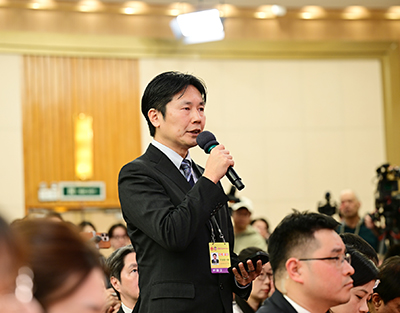 Kyodo News: Last November, China protested strongly against Japanese Prime Minister Sanae Takaichi’s remarks concerning Taiwan. Since then, exchanges between Japan and China have stalled. Where does China want its relations with Japan to go this year?
Wang Yi: The future of China-Japan relations hinges on Japan’s choice.
Last year marked the 80th anniversary of the victory of the Chinese People’s War of Resistance Against Japanese Aggression. In such a special year, Japan should have deeply repented of the wrong path it chose, including its brutal invasion and colonization of Taiwan. Yet the current Japanese leader claimed that a Taiwan contingency could constitute a “survival-threatening situation” for Japan, under which Japan may exercise its so-called “right of collective self-defense.” It’s well-known that the right of self-defense shall be invoked only when a country has come under armed attack. One would ask: Since Taiwan affairs are purely China’s internal affairs, what gives Japan the right to interfere with them? Why is Japan entitled to invoke self-defense if anything happens in China’s Taiwan region? Is exercising the “right of collective self-defense” simply a way to hollow out Japan’s pacifist Constitution, which renounces the right of belligerency? Given that Japanese militarists had used “survival-threatening situation” as a pretext for launching aggression, such rhetoric can only make the people in China and the rest of Asia alert and deeply worried: Where exactly is Japan headed?
This year also marks another significant 80th anniversary—that of the opening of the Tokyo Trials. Eighty years ago, judges from 11 countries commenced proceedings that would span two and a half years, reviewed a mountain of irrefutable evidence, and laid bare the innumerable crimes of Japanese militarists. The Tokyo Trials, a litmus test of humanity’s conscience, delivered historical justice. Eighty years on today, Japan is given another opportunity for serious soul-searching. As Chinese adages remind us, “History is a mirror that reflects the rise and fall of human affairs” and “The past, if not forgotten, can serve as a guide for the future.” We hope the Japanese people will keep their eyes wide open and never allow anyone foolish enough to tread the same disastrous path today. A strong China with 1.4 billion people will never allow anyone to justify colonialism or reverse history’s verdict on aggression.
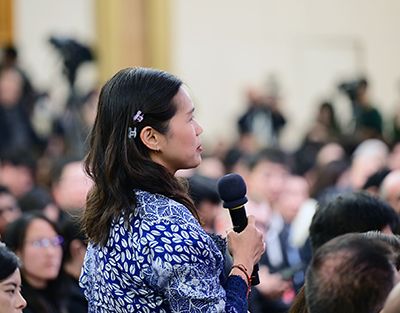 Antara News Agency: With the Philippines assuming the ASEAN Chairmanship in 2026, how does China view the prospects for advancing consultations on a Code of Conduct in the South China Sea with ASEAN member states?
Wang Yi: The South China Sea is home to the world’s busiest, safest and freest shipping lanes. Over the past year, cooperation in the South China Sea has kept a sound momentum. China had in-depth discussions with Indonesia on joint maritime development, held bilateral dialogue with Malaysia on maritime issues, and carried out cooperation with Viet Nam on sustainable fisheries development. Just recently, Chinese Coast Guard successfully rescued over a dozen Filipino crewmen distressed at sea. All these are ample proof that peace, cooperation and friendship should be the new narrative of the South China Sea. Making waves wins no hearts and fomenting trouble finds no takers.
Yet lasting peace and stability requires solid institutional support. As we continue with the full and effective implementation of the Declaration on the Conduct of Parties in the South China Sea, consultation on a Code of Conduct in the South China Sea (COC) has reached crunch time. All relevant parties look forward to wrapping it up this year. Together with the parties, China has the confidence and the resolve to remove interference, bridge differences, expand common ground, and reach an agreement as soon as possible. The COC will provide the golden rules for the parties to effectively manage differences, build trust, and advance cooperation.
We also hope that as this year’s ASEAN Chair, the Philippines will recognize and fulfill its responsibility, resist the pull of self-interest, and play a positive role for peace and stability in the region.
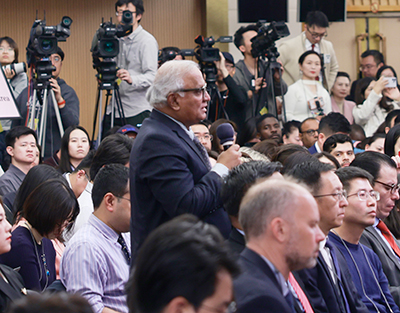 Press Trust of India: India and China have been on the course of normalizing their relations after five years of disruption. India will host the BRICS summit later this year. How does China view the progress and future trajectory of the relationship?
Wang Yi: President Xi Jinping and Prime Minister Narendra Modi had a successful meeting in Tianjin last August. Building on the fresh start enabled by their Kazan meeting in 2024, it brought about further improvement in China-India relations. Both sides are earnestly implementing the important understandings of our leaders. We are heartened to see reenergized interactions at all levels, a new record in bilateral trade, and closer people-to-people exchanges. All this has brought tangible benefits to the two peoples.
As each other’s important neighbors, and members of the Global South, China and India enjoy profound civilizational ties, and share extensive common interests. Mutual trust and cooperation is beneficial to the development of the two countries, while division and confrontation is detrimental to the rejuvenation of Asia. The two sides should follow the direction set by our leaders, remove interference, and advance toward the same goals. First, we must maintain the correct strategic perception of each other as partner rather than rival, and opportunity instead of threat. Second, we must uphold good-neighborliness and friendship, and jointly safeguard peace and stability in the border areas. Third, we must focus on development, which is the biggest common denominator of our two countries, and produce more visible outcomes of practical cooperation. Fourth, we must step up to the plate, and support each other’s BRICS presidency over the next two years, so as to make BRICS cooperation more substantive and bring new hope to the Global South.
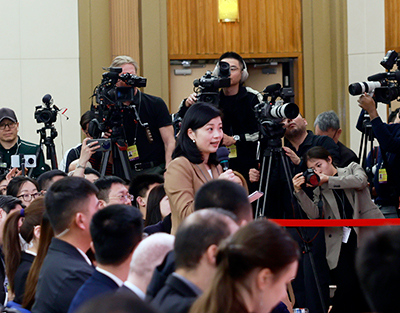 China Review News Agency: The Lai Ching-te authorities have been claiming that Taiwan is a “sovereign, independent country,” and that the Taiwan question is not China’s internal affairs. The Taiwan question and the cross-Strait situation have become more heated. What do you make of it?
Wang Yi: Taiwan has been an integral part of China since ancient times. It never was, is not, and never will be a country. Its return to China is a victorious outcome of the Chinese People’s War of Resistance Against Japanese Aggression and the Second World War. Its status has been definitively fixed by a series of international legal instruments, including the Cairo Declaration, the Potsdam Proclamation, Japan’s Instrument of Surrender, and Resolution 2758 of the U.N. General Assembly. Any attempt to create “two Chinas” or “one China, one Taiwan” is doomed to fail.
The DPP authorities’ obstinate pursuit of their separatist agenda is the root cause undermining peace and stability across the Taiwan Strait. It has been proven time and again that the more the international community stands against “Taiwan independence” and upholds the one-China principle, the more assured peace and stability will be across the Taiwan Strait.
The Taiwan question is China’s internal affair. It is at the core of China’s core interests—a red line that must not be crossed or trampled on. Taiwan was recovered by China over 80 years ago, and we will never allow any individual or force to separate it from China again. The one-China principle has overwhelming support in the international community. More and more countries are standing with China—not only reaffirming their commitment to the one-China principle and recognizing Taiwan as part of China, but also taking a clear stand against all activities for “Taiwan independence” and supporting the cause of China’s reunification. This is irrefutable proof that opposing “Taiwan independence” and promoting China’s reunification is the trend of the times, and meets the expectation of the international community.
Resolving the Taiwan question and realizing the complete reunification of our motherland is a historic process that cannot be stopped. Those who support it are on the right side of history; those who defy it shall perish.
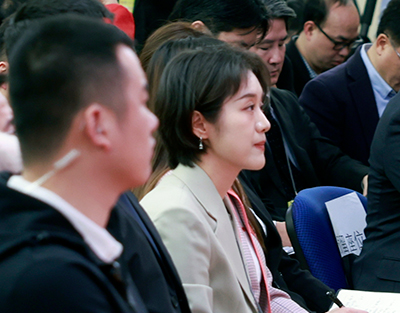 Global Times: The world is embroiled in more conflicts and intensifying competition and confrontation. Why has China decided to pursue the foreign policy goal of building a community with a shared future for humanity?
Wang Yi: You’re right in saying that humanity finds itself in an era fraught with challenges. Throughout history, even in the darkest times, there have always been those who never stopped chasing ideals and light. President Xi Jinping is such a pioneer. With the foresight and compassion of a leader at the helm of a major country, President Xi Jinping answered the big question of where humanity is headed by proposing to build a community with a shared future for humanity. His message is clear: Humanity’s enemies are not each other—they are war, poverty, hunger, and injustice. One cannot defeat them by fighting alone or looking after only oneself. Instead, the world must come together and build a common future. Alone, one is helpless; united, we can have great strength. The truth and value of this vision are sinking in with people around the world. It’s like a beacon lighting the way forward for humanity.
This vision encapsulates how China sees its role in the world and in history as a major country. The Chinese have always had a noble tradition of acting for the common good and pursuing harmony for all. Our great rejuvenation as a nation and our rise as a country of 1.4 billion people will not follow the beaten track where big powers vied for supremacy and territory. On the contrary, we will take a path of peaceful development, and we encourage other countries to take the same path. Together, we can build an open, inclusive, clean and beautiful world that enjoys lasting peace, universal security and shared prosperity.
We are encouraged by the growing support for this vision. More than 100 countries and international organizations have embraced it, and nearly 80 percent of people around the world are in favor. Over 40 countries and regional organizations have joined us in realizing this vision. This attests to the saying that “right makes might.” A righteous cause is sure to garner mighty support of the world’s countries, and pool the strength of the people.
The future of humanity is bright, but it will not come on its own. Building a community with a shared future for humanity is both a beautiful vision and a historic process. It requires the united efforts of many generations. China will press ahead with conviction and concrete steps, and work with any and all to make it a reality.
The press conference lasted 80 minutes.