People’s Republic of China


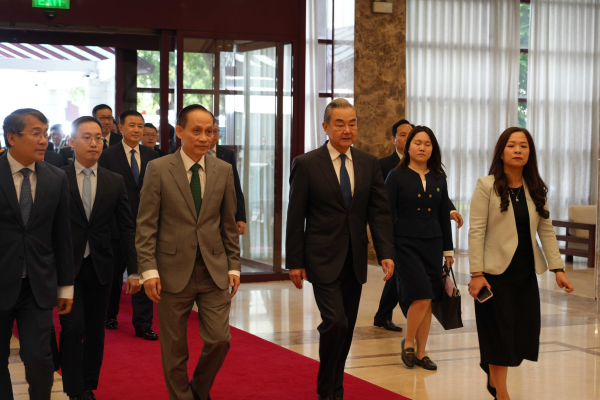
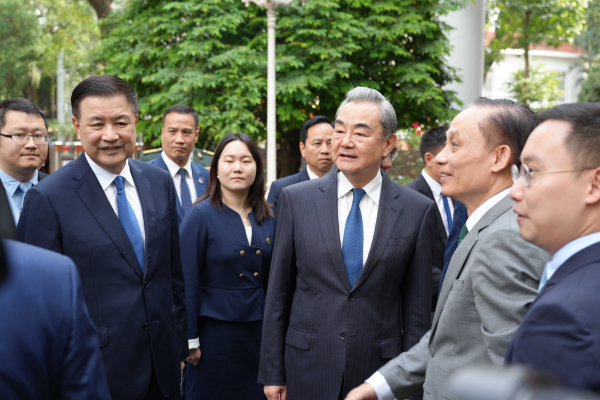
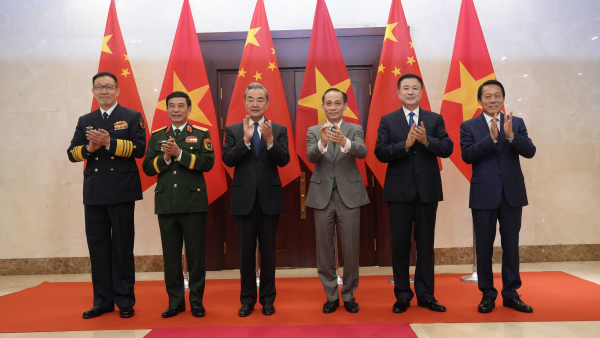
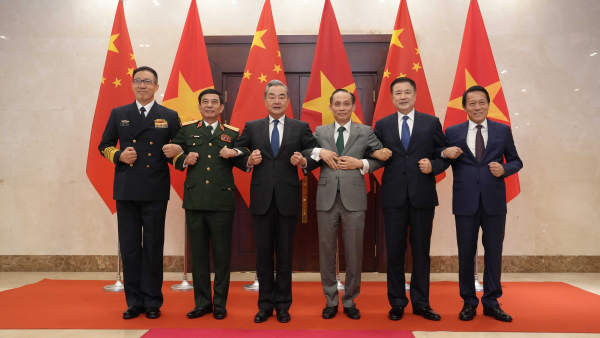
On March 16, 2026, local time, the first ministerial meeting of the China-Viet Nam “3+3” strategic dialogue on diplomacy, defense and public security was convened in Hanoi. The meeting was jointly chaired by Foreign Minister Wang Yi, Minister of Public Security Wang Xiaohong, and Minister of National Defense Dong Jun, together with Vietnamese Foreign Minister Le Hoai Trung, Defense Minister Phan Van Giang and Minister of Public Security Luong Tam Quang. Centered on the theme “Coordinating Development and Security, Advancing on the Socialist Road with Unwavering Commitment, and Forging United Fronts to Confront Shared Challenges,” the two sides engaged in an in-depth exchange of views regarding the dynamic shifts in the global landscape, the maintenance of political security, and the advancement of defense and law enforcement cooperation. The dialogue yielded broad consensus.
Wang Yi remarked that last year, General Secretary and President Xi Jinping paid a state visit to Viet Nam, where he forged pivotal consensus with Vietnamese leaders on convening ministerial meeting of the China-Viet Nam “3+3” strategic dialogue. This mechanism stands as a groundbreaking and vital strategic communication platform, jointly pioneered by both nations in the global arena. It is a major measure with strategic significance, designed to safeguard the security of political systems and deepen strategic collaboration. It stands not merely as an intrinsic facet in propelling the building of a China-Viet Nam community with a shared future, but also as an indispensable and pivotal move towards rejuvenating the global socialist cause. This mechanism epitomizes the elevated level and strategic essence of the relations between the two Parties and countries.
Wang Yi stated that the contemporary global landscape is beset by intertwined turmoil and chaos, with the international architecture undergoing accelerated realignment, while unilateral bullying gets more rampant. Conversely, the cause of socialism with Chinese characteristics is advancing with strides, witnessing the smooth commencement of the 15th Five-Year Plan. Simultaneously, Viet Nam has ushered in a new epoch of national development, accelerating the implementation of the resolutions of the 14th National Congress of the Communist Party of Viet Nam. The stability and development of both China and Viet Nam will manifest to the world the distinct superiority of the socialist system, the robust vitality of the socialist cause, and the bright prospects for human development and progress.
Wang Yi emphasized that as friendly socialist neighbors, China and Viet Nam must not only focus on the fundamental well-being of their peoples, effectively coordinate the dual imperatives of development and security, and steadfastly pursue their respective development paths, but also keep foremost in mind the shared interests of all mankind, steer the correct direction of historical progress, and jointly promote an equal and orderly multi-polar world, and an economic globalization that is inclusive and beneficial to all through the building of a China-Viet Nam community with a shared future carrying strategic significance. Centered on achieving the overarching goal of “six mores” in China-Viet Nam relations, the foreign ministries of the two countries should maintain close multilateral coordination, extend mutual support to each other’s major initiatives and philosophies, engage in strategic communication on diplomatic decision-making and international and regional issues, bolster cooperation on multilateral frameworks such as China-ASEAN, Lancang-Mekong Cooperation, and BRICS, and properly address maritime issues, and thus cultivate an even more conducive international environment for their respective national advancement.
Wang Xiaohong stated that the public security departments of the two nations must focus on the overarching goal of “six mores,” prioritizing political security and enhance efforts to prevent and resist "color revolutions." Strategic planning should be placed at the forefront, serving as a catalyst to galvanize a formidable and united front. Moreover, we should anchor efforts in the people’s interests, pursuing more tangible and substantive cooperation outcomes to effectively bolster the respective socialist endeavors of the two countries and the construction of a strategically significant China-Viet Nam community with a shared future. Special emphasis should be placed on refining law enforcement and security cooperation mechanisms in critical domains such as cybersecurity, cracking down on online gambling and telecom fraud, drug control, and the pursuit and repatriation of fugitives and illicit assets. Furthermore, we should foster enhanced exchanges and mutual learning in areas like “Safe City” initiatives and leveraging technology to empower the police force. Through these concerted efforts, they can jointly elevate their law enforcement capabilities, adeptly navigate risks and challenges, and conscientiously uphold security and stability.
Dong Jun stated that, confronted with unprecedented external security risks and challenges, the armed forces of China and Viet Nam, steadfastly under the absolute leadership of their respective Communist Parties, shoulder a profound and sacred duty in fortifying the Party’s enduring governance and safeguarding the socialist red regime. Under the guidance of the supreme leaders of both parties, they must unite to forge a strong defense and security shield. China stands ready to collaborate closely with Viet Nam, continuously deepening mutual trust in military security, further expand cooperation areas, improve the quality and effectiveness of cooperation, jointly safeguard maritime security and stability through positive interaction, and push bilateral defense exchanges and cooperation to a new level, setting an example of unity and self-reliance for the armed forces of socialist countries.
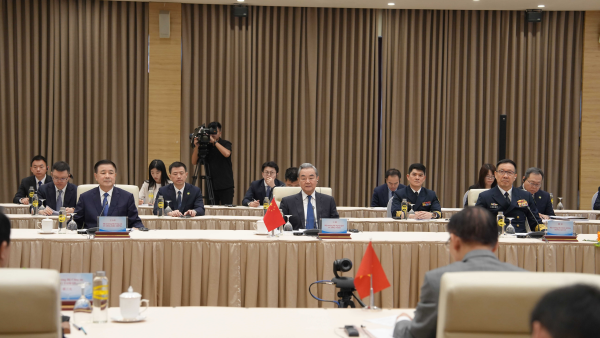
The Vietnamese side conveyed its congratulations on the triumphant conclusion of China’s national "two sessions”, as well as the approval of the 15th Five-Year Plan outline. They emphasized that the decision by the supreme leaders of the two Parties and nations to institute the “3+3” strategic dialogue mechanism at the ministerial level stands as a landmark decision of far-reaching strategic import. This initiative manifests the extraordinary amity, profound political trust, and close strategic ties between Viet Nam and China, aligning perfectly with the positioning of the comprehensive strategic cooperative partnership and a community with a shared future with strategic significance. Amidst the rapidly evolving and increasingly unpredictable international and regional landscpae, it has become particularly urgent for the two parties and countries to strengthen solidarity and cooperation in addressing shared challenges. Viet Nam unwaveringly considers the consolidation and advancement of relations with China as the priority and strategic choice of its foreign policy, steadfastly upholding the one-China policy and extending resolute support on issues concerning China’s core interests. Viet Nam is willing to work hand in hand with China to prepare for high-level exchanges, promote cooperation in various fields, and strengthen multilateral coordination to jointly elevate the Vietnam-China comprehensive strategic cooperative partnership to a higher level. Moreover, Viet Nam stands ready to forge closer coordination and collaboration with China to comprehensively safeguard the security of the two nations’ political regimes and institutional frameworks, combat transnational criminal activities through concerted efforts, enhance information dissemination and experience-sharing, bolster military exchanges, deepen defense cooperation, and collectively contribute to the construction of a balanced, effective, and sustainable security architecture in the Asia-Pacific region.
Both sides jointly stated that the first ministerial meeting of the China-Viet Nam “3+3” strategic dialogue had culminated in success, marking the establishment of a new platform, stepping up to a new stage, and elevating to a new level in China-Viet Nam strategic communication and collaboration.
Both sides acknowledged that the world now enters a period of turbulence and transformation, posing common challenges to the socialist endeavors of both nations. In response, both sides pledged to uphold strategic vigilance and staunchly secure the ideological front; fortify strategic resolve to foster closer unity; enhance strategic resilience, harness institutional strengths and deepening mutually beneficial cooperation; and enhance strategic coordination to resolutely safeguard the international system with the United Nations at its core and the international order based on international law.
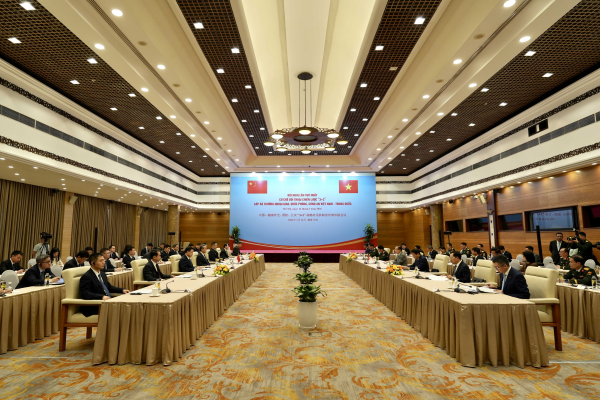
Furthermore, both sides agreed to convene the second ministerial meeting of the China-Viet Nam “3+3” strategic dialogue in China by fully leveraging the mechanism’s daily liaison functions through senior officials to foster in-depth sectoral exchanges in diplomacy, defense, and public security.
Concurrently, the 9th ministerial conference on collaborative crime combat between the public security ministries of the two countries, along with the 10th border defense friendship exchange, will also be held during the meeting.