People’s Republic of China


Xinhua News Agency: Today marks the 27th anniversary of the signing of the MOU between the governments of the People’s Republic of China and Japan on the destruction of the chemical weapons abandoned by Japan in China. Could you update us on how the work is progressing and whether China has any concerns?
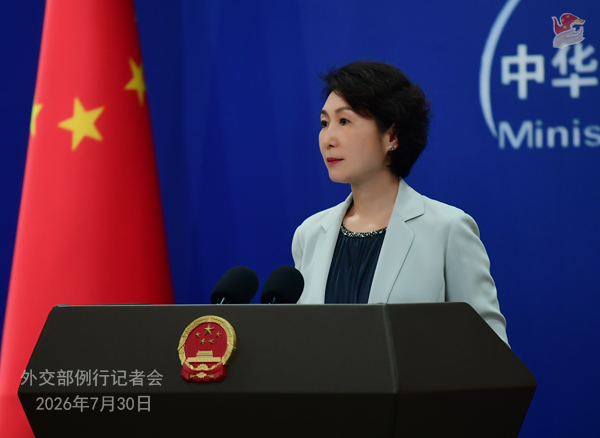
Mao Ning: Japan’s abandoned chemical weapons (ACWs) in China mark one of the gravest crimes that Japanese militarists committed during the war of aggression against China. Even today, they still pose a threat to the safety of the life and property of the Chinese people and the ecological environment. The complete destruction of the ACWs is Japan’s unshirkable historical, political and legal responsibility.
In accordance with the Chemical Weapons Convention and the MOU between the two countries’ governments, Japan should have completed the destruction process by 2007. However, the Japanese side has demonstrated insufficient sincerity and inadequate input in fulfilling its obligations, and the implementation of the destruction plan has already missed its deadline four times. The destruction process is seriously lagging behind schedule, and the safety hazards posed by Japan’s ACWs remain.
China calls on Japan to fully and faithfully fulfill its responsibility and obligations under the relevant convention and the MOU, provide effective information on burial sites as soon as possible, and speed up the disposal process, so that the day will come sooner when the hazardous Japanese ACWs are destroyed completely and thoroughly, and the Chinese people no longer have to live on soil tainted by ACWs.
Beijing Youth Daily: This year marks the 30th anniversary of the conclusion of the Comprehensive Nuclear-Test-Ban Treaty. It was also 30 years ago, on July 29, that China declared a moratorium on nuclear testing, a commitment it has honored ever since. A nuclear test ban has also become a prevailing international consensus. Would you like to comment on this?
Mao Ning: In 1996, the Chinese government solemnly declared that it would start a moratorium on nuclear testing. The decision, while responding to the call of non-nuclear-weapon states, also made a historic contribution to the final conclusion of the Comprehensive Nuclear-Test-Ban Treaty (CTBT) and gave a strong boost to the international nuclear arms control process.
Over the past 30 years, China has honored its nuclear test moratorium commitment and actively supported international efforts aimed at banning nuclear tests. As one of the first signatories of the CTBT, China firmly supports the treaty’s objectives and purpose, its early entry into force, and capacity building in developing countries, and actively advances preparatory work for its implementation at home, making important contributions to upholding the treaty’s universality and authority.
China’s nuclear policy maintains a high degree of stability, continuity and predictability. We advocate the complete prohibition and thorough destruction of nuclear weapons, follow a policy of no-first-use of nuclear weapons, and unconditionally commit not to use or threaten to use nuclear weapons against non-nuclear-weapon states or nuclear-weapon-free zones. China follows a nuclear strategy of self-defense, keeping its nuclear capabilities at the minimum level required for safeguarding national security, and does not engage in any form of nuclear arms race. China’s nuclear strength is an essential force for deterring nuclear warfare and safeguarding world peace and security as well as global strategic stability.
PTI: Expectations are high about the attendance of Chinese leader in the forthcoming BRICS Summit India, especially after a series of meetings that the Indian foreign secretary this week held with Chinese officials, especially with Vice Foreign Minister Hua Chunying. Can you just comment about this particular expectations, about the possibilities of Chinese leader attending the BRICS summit? And also, can you comment on the outcome of Indian Foreign Secretary Mr. Vikram Misri’s meetings, especially with Madam Hua Chunying and other officials in Beijing?
Mao Ning: On Monday, Vice Foreign Minister Hua Chunying and Indian Foreign Secretary Vikram Misri held a meeting of the Vice Minister-Foreign Secretary mechanism between China and India in Beijing. They exchanged views on delivering on the important common understandings between the leaders of the two countries, deepening political mutual trust, advancing exchanges and cooperation in various areas, properly handling differences and disputes, and promoting the sound and steady development of China-India relations.
BRICS is an important platform for cooperation among emerging markets and developing countries. China attaches great importance to and actively participates in BRICS cooperation. We support this year’s chair India in making the BRICS Summit a full success. For specifics you mentioned, I have no information to share at the moment.
AFP: There’s been something of a row between New Zealand’s Foreign Minister Winston Peters and the Chinese ambassador there over some comments that Peters made towards an MP of Chinese descent. There have also been some reports that the Chinese embassy has launched a protest over this incident. So I wondered if you could confirm that there’s been this protest and also just any other comments you have on that incident?
Mao Ning: Parliamentary debates in New Zealand are New Zealand’s internal affairs. China will not comment on that. We have noted that people from various sectors in New Zealand, including Prime Minister Christopher Luxon have criticized the remarks made by the individual you mentioned. China respects the development paths, systems and models independently chosen by the people of all countries, and opposes all forms of discrimination and prejudice. It is hoped that relevant individual in New Zealand will do more things that contribute to the friendship between our two countries, and refrain from making China an issue in domestic politics.
Reuters: We had a story that a commercial sea drone captured the footage of a Chinese warship operating in the Philippines’ exclusive economic zone. Do you have any comment on that?
Mao Ning: The Chinese military conducts activities in accordance with international law and common international practice. We would advise against dangerous close approaches to Chinese naval vessels to prevent unintended air and maritime incidents.
Bloomberg: There’s a Reuters report that China plans to supply 400 SAMs (surface-to-air missiles) to Iran. Can you respond to the report?
Mao Ning: China has made its position clear on relevant issues on multiple occasions. The report is not true and has no factual ground at all. China always works for peace and the end of the conflict.